
Carmichaelia petriei
Carmichaelia petriei
Description
Growing requirements
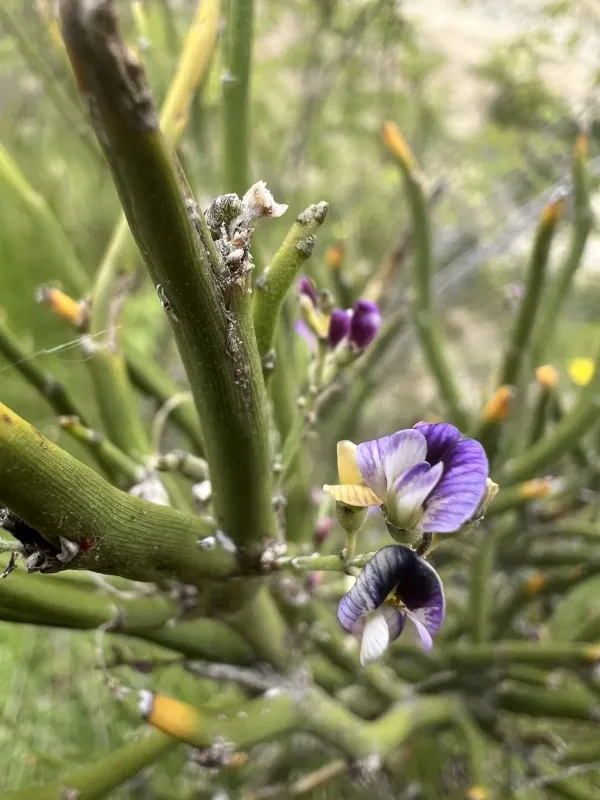
Carmichaelia petriei is a distinctive species within the Fabaceae family, native to the South Island of New Zealand. Commonly known as a type of New Zealand broom, it is biologically fascinating due to its leafless nature, where flattened green stems called cladodes handle all photosynthetic activity.
The plant thrives in well-drained, stony, or sandy soils, mimicking its natural habitat in open river valleys and mountain slopes. Successful cultivation relies on providing full sun exposure, as insufficient light will weaken the stems and reduce the plant's overall structural integrity.
Regarding climate, the plant is remarkably hardy, capable of withstanding strong winds and drought conditions. However, it is highly intolerant of waterlogged soils. Ensuring excellent soil drainage is the single most important factor for long-term health and growth in cultivation.
As a legume, this species contributes to soil health through nitrogen fixation. This characteristic makes it an excellent candidate for ecological restoration projects or planting in nutrient-poor, eroded environments where other vegetation might struggle.
In landscape design, Carmichaelia petriei is prized for its architectural form and olive-green appearance. It requires minimal pruning, mostly focused on removing dead or damaged stems after the flowering season to maintain a compact and healthy shape.
Main diseases and pests
The primary threats to Carmichaelia petriei are fungal pathogens, which typically colonize the plant during periods of high humidity or poor soil drainage, leading to root and stem rot.
Pests such as aphids and scale insects are known to infest the cladodes. These pests extract sap from the succulent stems, which can cause significant stress to the plant and promote the growth of sooty mold.
To mitigate these risks, growers should prioritize airflow by avoiding crowded planting arrangements. Maintaining dry, well-aerated conditions around the base of the plant is vital to prevent moisture-related diseases.
When infestation or fungal spots are detected, selective pruning of the affected branches combined with targeted treatments is necessary. Avoid broad-spectrum chemicals whenever possible to preserve local beneficial insect populations.
Regular monitoring of the plant's structural state and ensuring the drainage system remains clear are standard preventative measures that effectively reduce the need for intensive chemical pest management.