
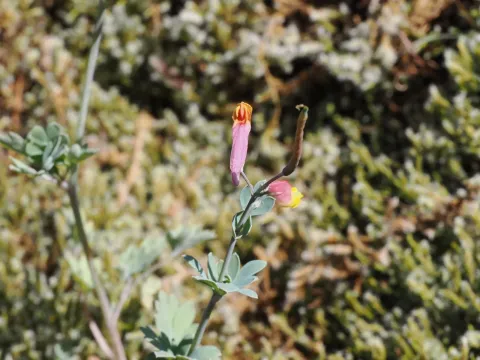
Capnoides
Capnoides
Capnoides belongs to the Fumariaceae family. This is an herbaceous annual plant that naturally occurs primarily in North America, exhibiting specific adaptation patterns to its environment.
What the section contains

Capnoides
The crop prefers locations with moderate moisture levels and well-drained soils rich in organic matter. It is highly sensitive to waterlogging, which often triggers root rot diseases.
For optimal growth, the plant requires diffused light or partial shade. Exposure to direct sunlight during peak heat hours can stunt its development and cause the foliage to wilt prematurely.
In terms of agricultural management, Capnoides is not considered a large-scale commercial commodity. Its cultivation is typically restricted to research nurseries and specialized botanical farming.
The temperature requirements are moderate. While the plant can withstand slight temperature fluctuations, sudden frosts or extreme heat events significantly compromise the crop's overall productivity.
The primary threat to Capnoides stands comes from fungal infections caused by excessive soil humidity. Poor soil aeration typically results in the rapid development of root and basal rot.
Among pests, various species of aphids pose the greatest challenge. They feed on plant sap, specifically targeting young shoots and flowers, leading to severe leaf curling and stunted growth.
Leaf-eating insects also frequently damage the vegetative parts. Regular monitoring of the plant population is essential to identify early outbreaks and implement effective control measures.
Preventative strategies focus on maintaining proper crop rotation and managing planting density. Overcrowding creates a humid microclimate that favors pathogen proliferation.
Fungicide application must be strictly regulated to avoid disrupting the ecological balance of the area where this specific crop is being grown.