
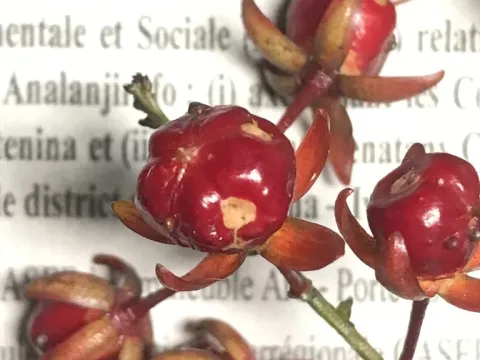
Campylospermum
Campylospermum
Campylospermum is a genus of evergreen shrubs and small trees belonging to the Ochnaceae family. Native to tropical regions across Africa and Asia, these plants are typically found in moist forest environments, contributing significantly to the diversity of tropical understories.
What the section contains
 Campylospermum densiflorum
Campylospermum duparquetianum
Campylospermum duparquetianum
Campylospermum dybovskii
Campylospermum dybovskii
Campylospermum elongatum
Campylospermum elongatum
Campylospermum densiflorum
Campylospermum densiflorum
Campylospermum duparquetianum
Campylospermum duparquetianum
Campylospermum dybovskii
Campylospermum dybovskii
Campylospermum elongatum
Campylospermum elongatum
 Campylospermum flavum
Campylospermum glaberrimum
Campylospermum glaberrimum
Campylospermum flavum
Campylospermum flavum
Campylospermum glaberrimum
Campylospermum glaberrimum
 Campylospermum laxiflorum
Campylospermum laxiflorum
Campylospermum laxiflorum
 Campylospermum mannii
Campylospermum oliveri
Campylospermum oliveri
Campylospermum reticulatum
Campylospermum reticulatum
Campylospermum schoenleiniana
Campylospermum schoenleiniana
Campylospermum mannii
Campylospermum mannii
Campylospermum oliveri
Campylospermum oliveri
Campylospermum reticulatum
Campylospermum reticulatum
Campylospermum schoenleiniana
Campylospermum schoenleiniana
 Campylospermum serratum
Campylospermum squamosum
Campylospermum squamosum
Campylospermum subcordatum
Campylospermum subcordatum
Campylospermum sulcatum
Campylospermum sulcatum
Campylospermum vogelii
Campylospermum vogelii
Campylospermum zenkeri
Campylospermum zenkeri
Campylospermum serratum
Campylospermum serratum
Campylospermum squamosum
Campylospermum squamosum
Campylospermum subcordatum
Campylospermum subcordatum
Campylospermum sulcatum
Campylospermum sulcatum
Campylospermum vogelii
Campylospermum vogelii
Campylospermum zenkeri
Campylospermum zenkeri
Campylospermum
Climate requirements for this culture are centered on tropical heat and high humidity levels. It is strictly a frost-sensitive plant, necessitating cultivation in greenhouses or temperature-controlled conservatories in non-tropical climates to ensure survival and consistent growth.
Soil quality is paramount for successful cultivation. The ideal substrate is well-draining, humus-rich, and slightly acidic. Proper drainage is essential to prevent water stagnation around the roots, which can be lethal for this plant species in a container environment.
Water management involves maintaining a consistent moisture level in the substrate without allowing it to become waterlogged. Regular misting is recommended to simulate natural atmospheric humidity, which is vital for the health of the foliage and overall development.
Regarding light, Campylospermum thrives in bright, filtered light. While it can adapt to partial shade, providing protection from harsh, direct midday sunlight is necessary to prevent leaf scorch and maintain the vibrant green color of its foliage.
Fungal diseases are a primary threat, particularly those facilitated by poor air circulation or excessive moisture. Symptoms like leaf spotting or mildew require immediate isolation of the plant and treatment with appropriate systemic fungicides to save the specimen.
Insect pests such as spider mites, mealybugs, and scale insects frequently infest these plants in enclosed conditions. These pests can rapidly drain the plant's resources, causing yellowing leaves, stunted growth, and eventually leading to plant decline if left unchecked.
Integrated pest management strategies should be employed, starting with regular visual inspections of the stems and leaf undersides. Keeping the foliage clean and maintaining adequate humidity levels acts as a natural deterrent against many of these common greenhouse pests.
In cases of significant infestation, chemical interventions with insecticides are necessary. It is crucial to choose products specifically labeled for indoor or greenhouse use and to apply them according to the manufacturer's instructions for maximum effectiveness.
Finally, ensuring the overall vigor of the plant through proper nutrition and balanced fertilization schedules makes it more resilient to potential pathogen attacks. Strong, well-nourished plants are naturally more capable of resisting initial pest colonization.