
Campylospermum flavum
Campylospermum flavum
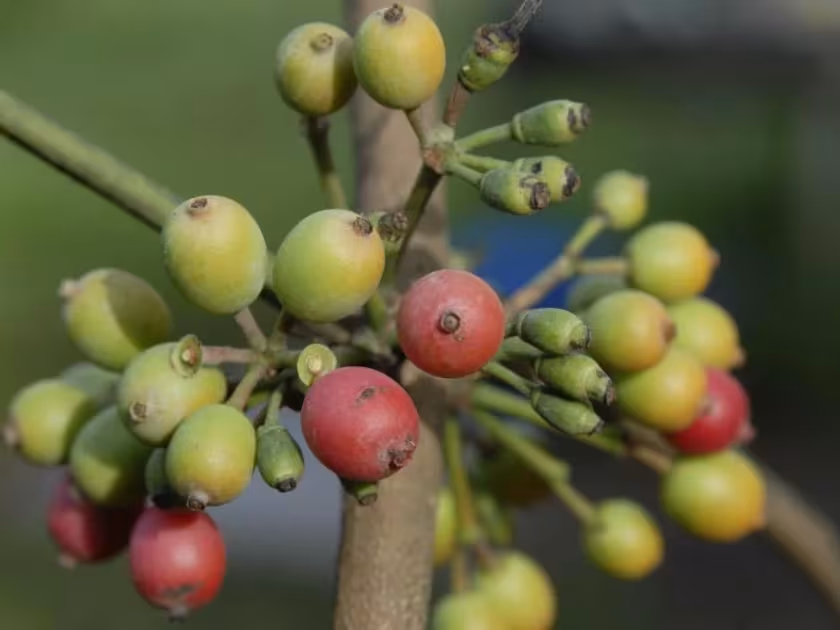
Description
Growing requirements
Campylospermum flavum is a member of the Ochnaceae family, recognized as an evergreen woody plant native to tropical African environments. It thrives in humid conditions and is highly valued for its biological diversity and specific floral structure.
Climate requirements for this species are strictly tropical, necessitating stable warm temperatures between 22 and 28 degrees Celsius. The plant is intolerant to frost and requires protection from cold drafts, which can cause significant physiological stress.
Soil quality is paramount for the health of Campylospermum flavum. It requires well-drained, fertile soil rich in humus. Waterlogging must be strictly avoided, as the root system is highly susceptible to fungal pathogens when exposed to stagnant water.
Regarding light, the plant prefers bright, filtered sunlight. Excessive exposure to direct tropical sun can lead to leaf scorching, meaning that cultivation in agroforestry systems under a shade canopy is often recommended for optimal yields.
Agronomic practices include regular irrigation and balanced fertilization throughout the active growth phase. Nutrient management should focus on maintaining adequate levels of nitrogen and potassium to support vegetative development and flowering density.
Yield
The economic utility of Campylospermum flavum spans various sectors, including traditional medicine and potential pharmaceutical research due to its unique secondary metabolites found in its leaves and fruit.
The flowering cycle of this species significantly impacts local pollinator populations. By providing a stable nectar source, it plays a vital role in maintaining the balance of the ecosystem where it is cultivated.
Harvesting strategies are based on the selective collection of mature parts of the plant. Since growth is relatively slow, sustainable harvesting techniques are employed to ensure long-term productivity and plantation longevity.
In modern agricultural contexts, it is increasingly viewed as a botanical resource that can be integrated into sustainable permaculture models, offering both environmental and commercial benefits to local farmers.
While global market data for this species is still emerging, local cultivation shows consistent results in biomass production, provided that soil moisture and nutrient availability are kept within the optimal parameters.