
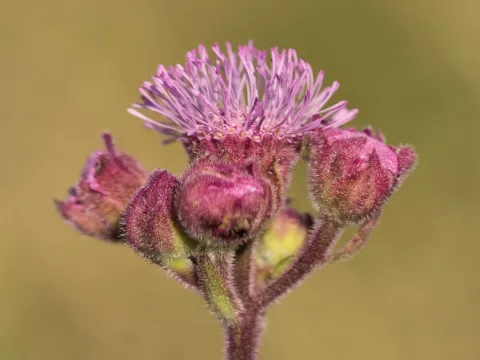
Campuloclinium
Campuloclinium DC.
Campuloclinium is a genus of perennial herbaceous plants belonging to the Asteraceae family. Known for their distinct purple flower heads, these plants are popular in ornamental horticulture for their unique structural appearance and long-lasting blooms.
What the section contains

Campuloclinium
Native to South America, specifically regions like Brazil and Argentina, the plant thrives in habitats that mimic its natural meadow-like environment. Understanding its native ecology is the key to successfully managing it in a garden setting.
The plant requires well-draining, nutrient-rich soil to develop a robust root system. It is essentially a sun-loving species; thus, placing it in full sun is necessary to ensure optimal photosynthetic activity and the production of healthy, vibrant inflorescences.
Climate adaptation is a critical factor for Campuloclinium growers. It prefers warm, stable temperatures and does not cope well with severe frost. In temperate zones, it is often managed as a container plant or treated as an annual to avoid winter damage.
Agrotechnical maintenance focuses on consistent moisture levels during the peak growth season. Providing adequate space between plants is also essential to improve airflow, which helps prevent the microclimate around the foliage from becoming too humid.
Common biological threats include fungal pathogens such as powdery mildew, which often occur when environmental conditions are excessively humid. Ensuring proper drainage is the most effective preventive measure against root diseases.
Pests, particularly aphids and spider mites, can cause significant damage to the foliage and buds. Regular monitoring and the application of integrated pest management strategies are recommended to maintain plant vitality throughout the season.