
Golden-flowered Camellia
Camellia petelotii (Merr.) Sealy
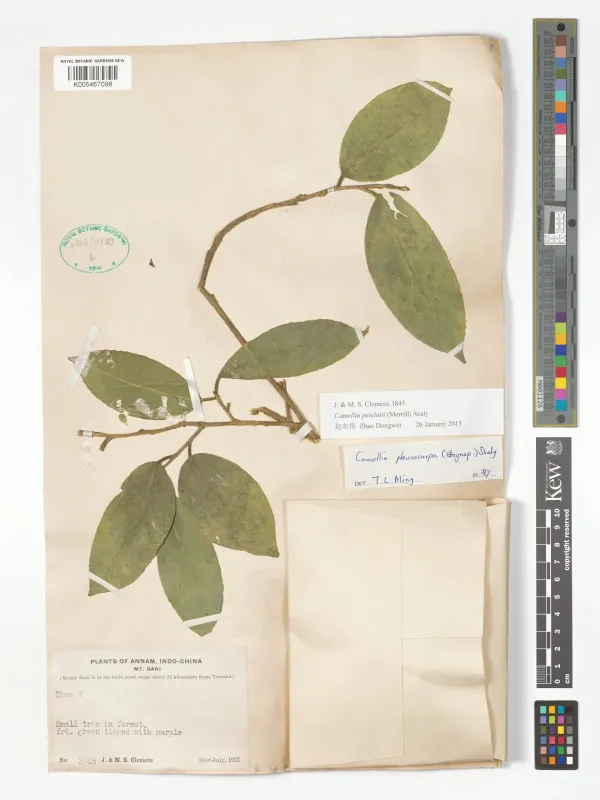
Description
Growing requirements
The Golden-flowered Camellia (Camellia petelotii) belongs to the Theaceae family. It is a rare evergreen shrub or small tree highly valued for its striking bright yellow blossoms, which distinguishes it from most other species in the genus Camellia.
Originating from the humid subtropical regions of China and Vietnam, this plant thrives in shaded environments. It prefers high atmospheric humidity and is sensitive to direct sunlight, which can scorch its dark green, glossy leaves.
Cultivation requires well-draining, acidic soil with plenty of organic matter. A peat-based mix or specialized substrate for acid-loving plants is recommended to maintain the optimal pH range between 5.5 and 6.5, which is critical for nutrient absorption.
Agricultural management involves consistent watering with soft, lime-free water. The plant does not tolerate waterlogging, so a robust drainage system is mandatory in greenhouse or container production to prevent root decay.
The plant has gained significant commercial interest due to its medicinal properties. The leaves and flowers are rich in polyphenols and antioxidants, making them highly sought after for the production of health-promoting teas and pharmaceutical supplements.
Main diseases and pests
Common fungal threats include anthracnose and leaf spot, which proliferate in environments with poor air circulation and excessive dampness. Maintaining proper spacing and airflow is essential for disease prevention.
Pest problems typically involve scale insects and spider mites that colonize the undersides of the leaves. Integrated pest management using neem oil or biological control agents is effective in maintaining plant health.