
Yellow Burr-daisy
Calotis lappulacea
Description
Growing requirements
Yellow Burr-daisy (Calotis lappulacea) is a member of the Asteraceae family. This perennial herb or small shrub is native to the arid and semi-arid regions of Australia, where it plays a role in the natural vegetation.
The plant thrives in well-drained soils, showing a preference for sandy or loamy textures. It is highly adapted to environments with low water availability, making it an resilient species in harsh climatic zones.
This species requires full exposure to sunlight for optimal growth and development. It is capable of enduring significant temperature fluctuations and prolonged drought periods, which are characteristic of its native habitats.
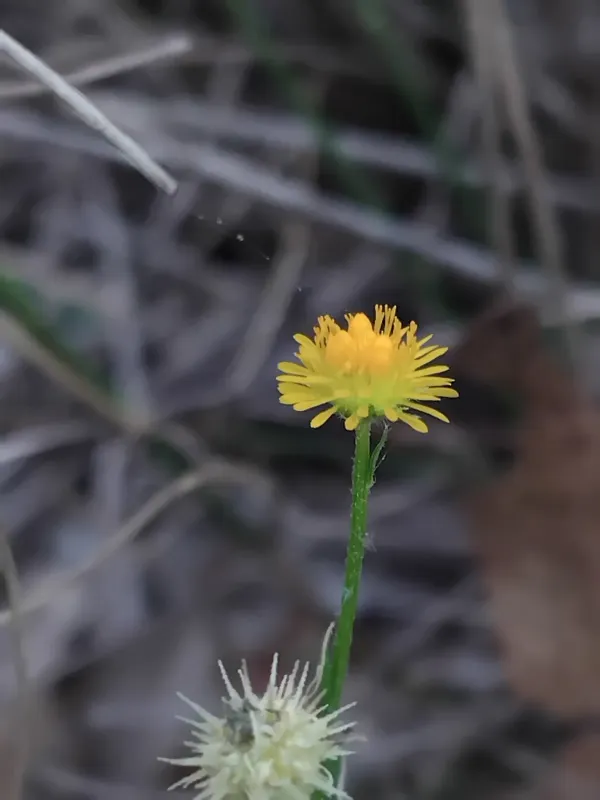
Botanically, it is defined by its small, yellow, daisy-like flower heads and characteristic barbed fruits. These fruits are specifically adapted to attach to the coats of animals, facilitating the dispersal of seeds across the landscape.
In terms of agricultural utility, it serves as a component of native pastureland. However, it is generally not cultivated as a primary crop due to the potential for its burrs to degrade the quality of livestock fleeces.
Main diseases and pests
The primary concern regarding this plant in agricultural settings is its burrs. When present in large quantities on grazing lands, the seeds attach to wool, significantly reducing its value and increasing processing costs.
Calotis lappulacea is generally robust against common agricultural diseases. It does not suffer from widespread fungal or bacterial outbreaks, as it is well-adapted to the natural stressors of its environment.
There are no specific major pests that focus on this species in an agricultural context, as it is not treated as a conventional commercial crop in modern farming systems.
Management techniques primarily involve grazing control to reduce seed production. Limiting the movement of livestock through dense patches during the seeding stage is the most effective biological control measure.
Chemical intervention is rarely implemented, as the plant is part of the native ecological balance, and it is usually controlled only when it becomes an invasive nuisance in premium pastoral areas.