
Bogan flea
Calotis hispidula
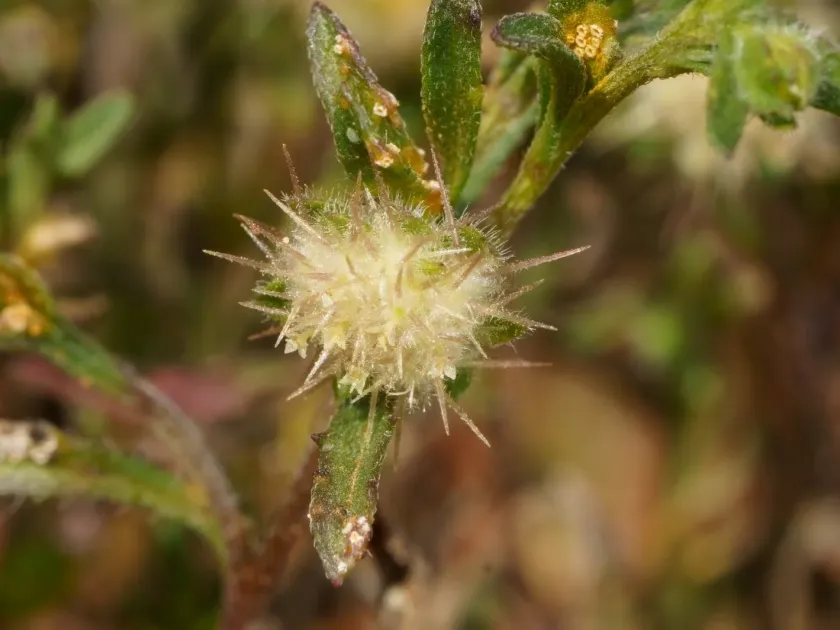
Description
Growing requirements
Bogan flea (Calotis hispidula) is an annual herb belonging to the Asteraceae family. It is widely distributed across the arid and semi-arid regions of Australia, where it has evolved to thrive in harsh, nutrient-poor environments with limited moisture availability.
The plant demonstrates excellent adaptability to various soil types, preferring well-drained sandy or loamy textures. Its biological cycle is optimized for rapid growth during the short windows when moisture is available, allowing it to compete effectively in its native habitat.
Sun exposure is a critical factor for the development of Calotis hispidula. It requires full sun for optimal photosynthesis and is highly intolerant to shaded conditions, which severely restrict its growth and potential seed production.
Regarding climate, the plant is remarkably resilient to heat and drought. It is often found in disturbed areas and along roadsides, indicating its role as a pioneer species that can stabilize soil against erosion in arid environments.
Agronomic practices for this species should focus on minimal soil disturbance to preserve soil structure. While it is not a traditional commercial crop, its potential as a supplementary forage source in desert climates remains a subject of interest for pasture management.
Main diseases and pests
The primary threats to Calotis hispidula populations are typically linked to moisture-related stress, such as root pathogens or fungal infections occurring during unseasonably wet conditions. Over-watering is arguably the greatest risk in managed cultivation.
Pest pressure from aphids can be significant in dense stands, especially when nitrogen-rich fertilizers are applied excessively. Such practices can lead to soft, succulent growth that is highly attractive to sap-sucking insects and mites.
Competition from aggressive, invasive weed species can quickly suppress the establishment of Bogan flea stands. Effective management requires early-stage weed control to ensure the plant can establish its root system and occupy the required growing space.
The characteristic spiny burrs (seeds) of the plant can be a source of physical irritation to livestock, often leading to welfare concerns if animals ingest them in large quantities. Grazing management should consider the phenological stage of the seed heads.
Environmental stress caused by overgrazing or extreme soil compaction may also hinder the plant's ability to regenerate via seed bank replenishment. A balanced approach to land usage is essential for maintaining a healthy population of the species.