
Calotis cuneifolia
Calotis cuneifolia
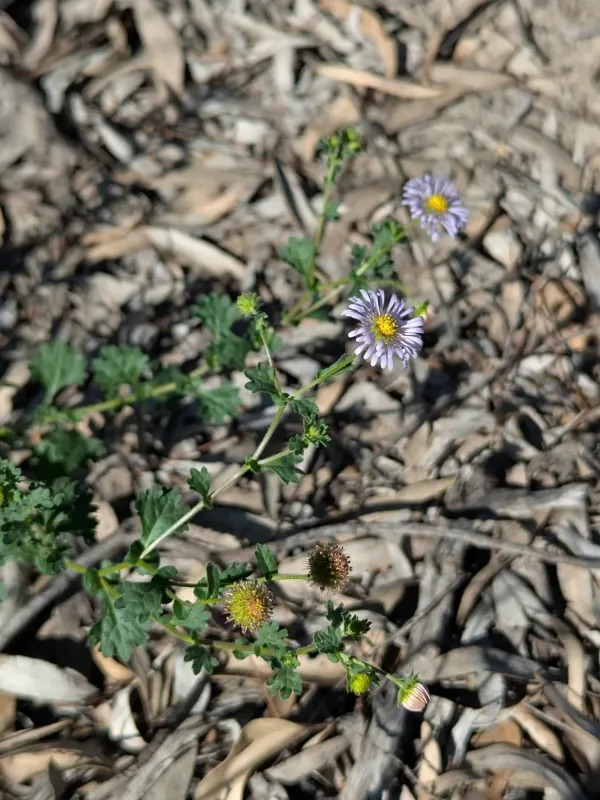
Description
Sowing dates
Calotis cuneifolia, commonly known as the wedge-leaf burr-daisy, is a perennial herb belonging to the Asteraceae family. This species is native to Australia and is well-adapted to arid and semi-arid environments.
The sowing process is best executed in early spring. The seeds require surface or shallow placement in the soil to ensure adequate exposure to sunlight, which is critical for successful germination.
Uniform distribution of seeds is essential for creating a healthy stand. Using calibrated equipment helps maintain the density required for optimal ground coverage and weed suppression.
After seeding, light rolling is recommended to improve seed-to-soil contact. This simple practice significantly enhances moisture retention around the seeds, speeding up the emergence process.
Monitoring the initial growth phase is crucial. During the first few weeks, maintaining consistent soil moisture levels prevents the dehydration of delicate seedlings, ensuring a robust establishment.
Growing requirements
This crop thrives in well-drained, light-textured soils. It exhibits remarkable tolerance to poor soil quality and is highly efficient at utilizing limited mineral resources in the environment.
Sunlight requirements are high; Calotis cuneifolia demands full exposure to sunlight for maximum physiological activity. Shaded areas drastically reduce growth rates and biomass production.
Temperature resilience is a key feature of the species. It is perfectly adapted to the hot, dry climates of its native range, showing little to no stress even during periods of intense heat.
Water requirements are relatively low. The plant is considered drought-tolerant, utilizing specialized root structures to survive in regions where rainfall is unpredictable or scarce.
Soil management should focus on aeration and drainage. Adding organic matter can improve soil structure over time, but the plant is primarily adapted to thrive in natural, unamended conditions.
Main diseases and pests
Calotis cuneifolia is naturally robust against many common agricultural pests. Its resilience is attributed to its evolved chemical defense mechanisms and physiological hardiness.
Root rot is the most significant threat, particularly in poorly drained soils. Excess water leads to hypoxia in the root zone, creating ideal conditions for pathogenic fungi.
Insect pressure is generally minimal but can occur during anomalous weather patterns. Regular scouting for defoliating larvae is recommended to protect the vegetative mass of the crop.
- Maintain proper drainage to prevent waterlogging.
- Avoid over-fertilization with nitrogen, which attracts pests.
- Implement crop rotation to break pathogen life cycles.
Effective management relies on a preventative approach. By maintaining a healthy ecosystem, farmers can minimize the need for external chemical inputs and ensure sustainable yield.