
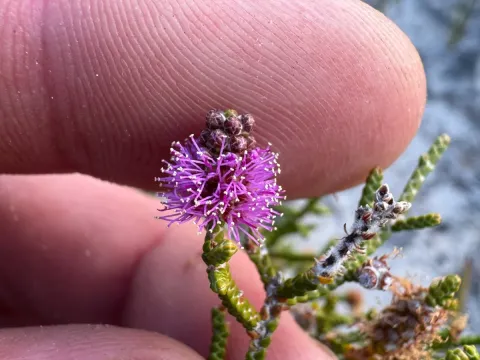
Calothamnus
Calothamnus Labill.
Calothamnus is a genus of evergreen shrubs belonging to the Myrtaceae family, native to Western Australia. These plants are known for their striking inflorescences, which feature long, vibrant stamens resembling a bottle brush, earning them a place in ornamental horticulture.
What the section contains

Calothamnus
Botanically, the species are characterized by tough, needle-like or narrow linear leaves that are well-adapted to surviving long periods of drought. Their growth habit varies from prostrate forms to tall shrubs, depending on the specific species and environmental conditions.
Cultivation requirements for Calothamnus focus on replicating their natural arid to semi-arid habitat. They demand full sun exposure to promote flowering and require extremely well-draining soil, typically sandy or gravelly in texture, to prevent root rot.
In terms of agricultural maintenance, these plants are highly efficient at nutrient uptake and perform best in low-fertility soils. Excessive fertilization, particularly with high phosphorus content, can be detrimental to the health and longevity of the shrub.
Climate adaptability is the most significant limiting factor for outdoor cultivation. While they thrive in Mediterranean climates, they must be protected from frost in colder regions, often necessitating greenhouse cultivation or pot-based management for winter protection.
The primary threat to the health of Calothamnus is fungal pathogens, specifically Phytophthora, which targets the root system. Proper irrigation management, ensuring the root zone dries out between waterings, is the most effective preventative measure.
Common pests include mealybugs and spider mites, which can infest foliage under greenhouse conditions or during periods of low humidity. Integrated pest management, including regular inspection and the use of insecticidal soaps, is recommended for effective control.