
Callitriche truncata
Callitriche truncata
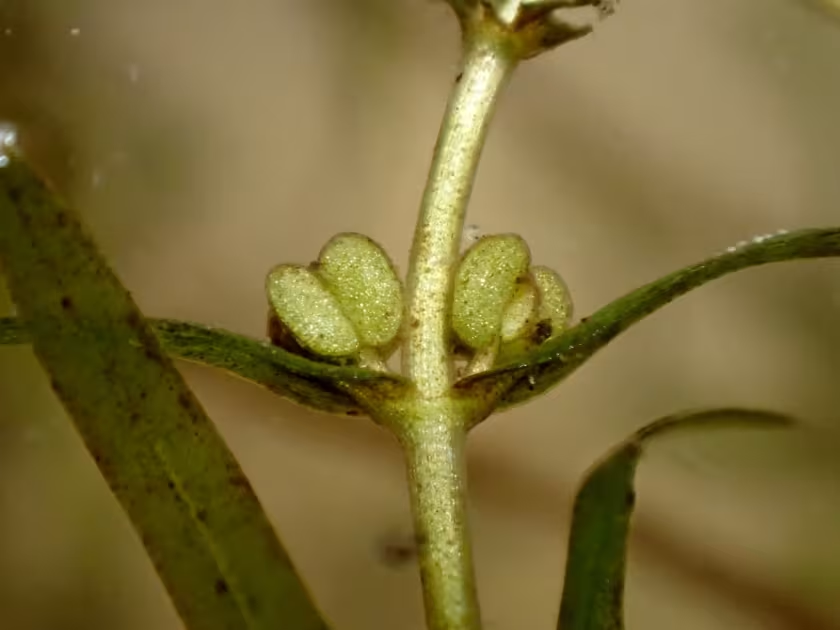
Description
Growing requirements
Callitriche truncata, commonly known as the truncated water starwort, is a unique aquatic species belonging to the Plantaginaceae family. It is adapted to submerged life, forming delicate vegetative structures within freshwater habitats.
The plant is naturally distributed across diverse regions in Europe and parts of Asia. It thrives in stagnant or slow-moving waters such as ditches, ponds, and quiet river backwaters where environmental conditions remain stable.
Light intensity is the primary driver for healthy development. Because the plant relies on submerged photosynthesis, clear, unpolluted water is essential to ensure that light penetrates to the deeper parts of the water column.
The preferred substrate consists of nutrient-rich silty or organic-heavy mud. This medium supports the plant's fine root system and allows it to anchor effectively in the bottom of the water body.
Climate requirements involve moderate water temperatures, typically corresponding to temperate zones. Fluctuations in temperature can affect the plant's reproductive cycle, particularly the formation of its small, inconspicuous flowers.
Main diseases and pests
Threats to Callitriche truncata are primarily ecological rather than agricultural. Eutrophication, caused by runoff from agricultural fields, leads to algal blooms that smother the plant population.
Mechanical damage from increased sedimentation or turbidity can impede growth, as the lack of light inhibits the plant's metabolic functions and leads to a decline in biomass.
Invasive non-native aquatic plants often outcompete this species for nutrients and space, leading to a loss of biodiversity in the affected freshwater systems.
Waterborne pathogens and potential fungi can affect the integrity of stems in environments where the water quality has significantly deteriorated due to pollution.
Anthropogenic disturbances, such as dredging or major hydrological changes to water bodies, can completely destroy local populations of this sensitive aquatic plant species.