
Japanese water-starwort
Callitriche japonica
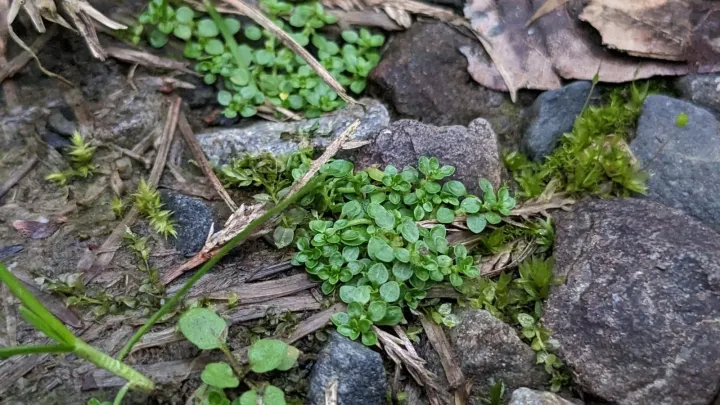
Description
Growing requirements
Japanese water-starwort (Callitriche japonica) is a small aquatic plant belonging to the Plantaginaceae family. It is widely recognized for its ability to thrive in shallow water bodies, such as ponds, ditches, and flooded fields.
The morphology of the plant includes delicate, opposite leaves and slender stems, which are perfectly adapted to aquatic environments. Depending on the depth, the plant can exhibit heterophylly, changing leaf shape for surface exposure.
Regarding soil requirements, the species prefers nutrient-rich substrates, particularly silt or clay bottoms that hold organic matter. It acts as an important biological filter in the ecosystem.
Climate adaptation is a key feature of this plant. It prefers temperate zones with stable water temperatures, though it can survive cooler periods if the water remains non-frozen.
Agricultural or landscape management of Callitriche japonica requires a consistent water level to prevent the plant from drying out, which is critical for maintaining its vegetative density.
Main diseases and pests
The primary threats to this species include infestation by aquatic snails that feed on tender plant tissues, potentially causing significant foliage loss during the growth phase.
Fungal pathogens associated with stagnant water conditions pose a constant risk, often leading to stem rot and systemic collapse of the plant colony.
Competition from invasive algal blooms is a major limiting factor, as algae can shade out the water-starwort and deplete dissolved oxygen levels.
Inappropriate water chemistry, such as extreme pH fluctuations or high concentrations of chemical pollutants, can inhibit growth and lead to chlorosis.
Maintaining a healthy aquatic environment through proper water circulation and managing nutrient runoff is essential to protect the vitality of the plant.