
Callitriche deflexa
Callitriche deflexa
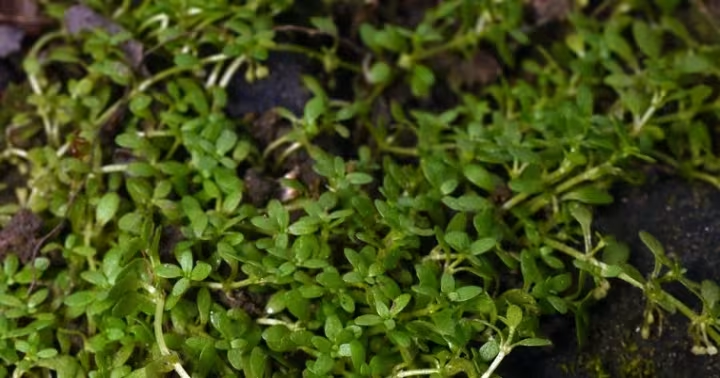
Description
Growing requirements
Callitriche deflexa is a semi-aquatic plant belonging to the Plantaginaceae family. It is recognized for its adaptability to wet soil and shallow water habitats, making it a valuable subject for specialized aquaculture.
The plant requires high humidity and well-lit environments to thrive. In cultivation, it performs best in soils rich in organic matter with a balanced pH level, providing the necessary nutrients for dense foliage development.
Climatic requirements focus on avoiding extreme temperature fluctuations. Callitriche deflexa is sensitive to frost, which necessitates the use of greenhouse protection in colder regions to maintain consistent growth rates.
Agrotechnical management includes regular irrigation and the monitoring of water levels. Proper drainage is essential to ensure that the substrate remains moist but not waterlogged, which prevents the development of rot.
When selecting a site for cultivation, it is important to choose areas with minimal flow, as strong currents can damage the delicate stems of the plant and disrupt the rooting process in the substrate.
Main diseases and pests
The primary threat to Callitriche deflexa is the colonization of algae, which competes for light and nutrients. Regular manual removal of competitive plant species is essential for the crop's health.
Fungal diseases are a constant risk in high-humidity environments. Maintaining good air circulation and preventing overcrowding in the planting rows can significantly reduce the risk of infection.
Pests such as aphids may attack the aerial parts of the plant. Biological control measures are preferred, as the species is sensitive to many harsh synthetic pesticides used in traditional agriculture.
Water quality degradation, including high mineral content or chemical contamination, can lead to stunted growth. Maintaining clean water standards is vital for productive yields.
Lack of monitoring can lead to rapid decay if environmental parameters are not met, especially during seasonal transitions. Constant observation by the agronomist is required to maintain the plantation.