
Autumn water-starwort
Callitriche hermaphroditica
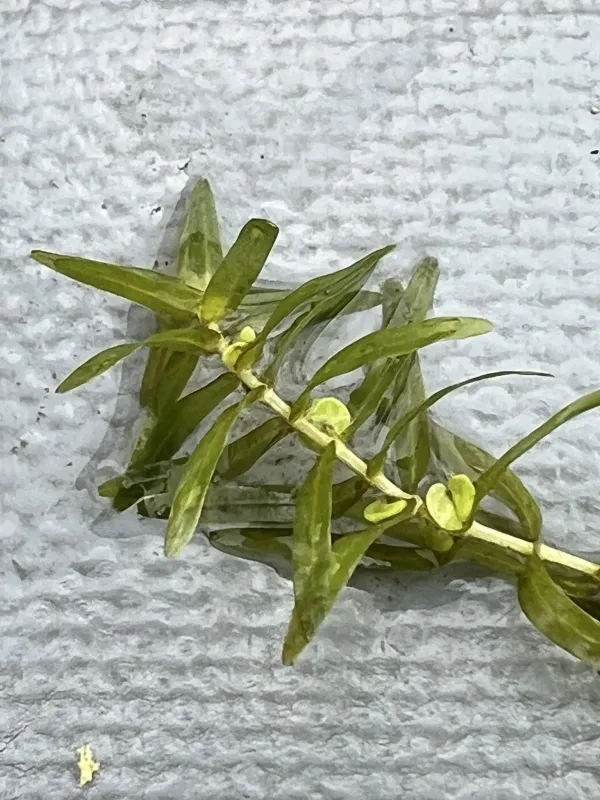
Description
Growing requirements
Autumn water-starwort (Callitriche hermaphroditica) is a submerged aquatic plant belonging to the Plantaginaceae family. It is distinctively adapted to an entirely submerged life cycle, typically anchoring itself in soft mud or silt at the bottom of ponds and slow-moving streams.
The distribution of this species spans vast regions of the Northern Hemisphere, where it thrives in cold to temperate freshwater environments. It is highly valued for its role in oxygenating water bodies and providing habitat for aquatic microorganisms.
Regarding climate and environment, this plant prefers cool, well-oxygenated water. Unlike many terrestrial crops, its metabolic rate is directly proportional to water temperature, but it requires constant, stable conditions to maintain biomass production.
Light availability is the most critical factor for photosynthesis. Because the plant remains submerged, the clarity and turbidity of the water column significantly impact its growth rates. High transparency is necessary to ensure deep penetration of solar energy.
Soil quality is secondary, as the plant absorbs nutrients primarily through its leaves directly from the water column. However, a nutrient-rich organic sediment layer helps sustain the root system during the initial stages of vegetative growth.
Main diseases and pests
Water pollution and nutrient loading represent the most significant threats to the species. Increased levels of nitrogen and phosphorus cause algal blooms, which significantly decrease water clarity and outcompete water-starwort for essential sunlight.
Fungal pathogens and certain aquatic rots can weaken the stem structures if the plant is exposed to sudden drops in water levels. This dehydration makes the tissue vulnerable to opportunistic decay-causing organisms.
Invasive species are a major concern, as aggressive aquatic invaders often overtake the spatial niches occupied by native water-starwort populations. This results in habitat fragmentation and long-term decline in local populations.
Siltation of water bodies due to erosion creates unstable substrates and burying of the plants. Without a stable anchorage, the plants are easily detached by water movement and eventually fail to thrive in deeper zones.
Damage from herbivores, particularly high populations of aquatic snails, can significantly reduce the photosynthetic area of the leaves, hindering the energy balance of the plant during the critical summer growth phase.