
Water starwort
Callitriche cophocarpa
Description
Growing requirements
Water starwort (Callitriche cophocarpa) is a member of the Plantaginaceae family. It is a distinctive aquatic plant typically found in calm or slow-moving freshwater ecosystems, reflecting the biodiversity of wetland environments.
The species has a wide distribution across Europe and parts of Western Siberia. It thrives in various habitats, including ditches, shallow ponds, and the margins of slow-flowing streams where nutrient-rich silt accumulates.
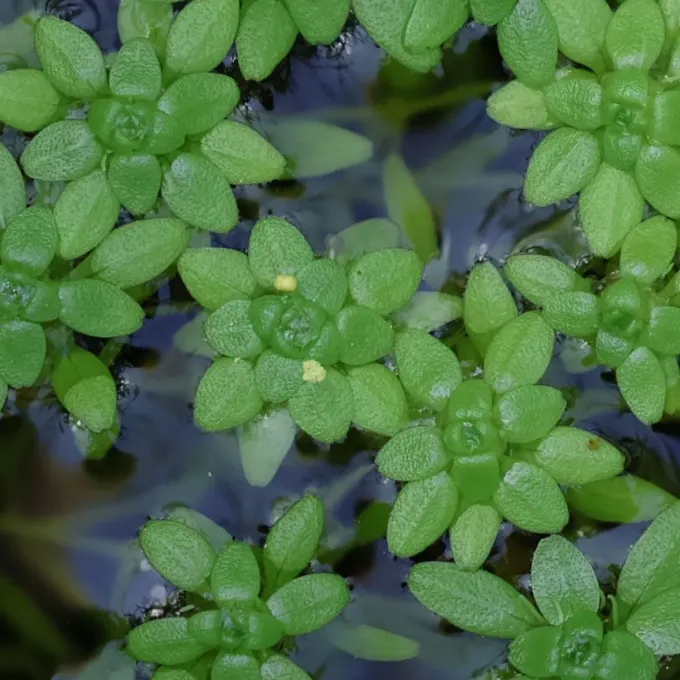
Botanically, it is known for its delicate stem structure and heterophylly. The plant produces submerged linear leaves and floating, broader leaves arranged in a rosette pattern, which is essential for capturing solar energy on the surface.
Regarding environmental requirements, this plant prefers areas with stable water levels and moderate light availability. It is highly adaptable, exhibiting plasticity by growing as a semi-terrestrial form in wet mud if the water recedes.
In terms of human use, water starwort is often utilized in pond management and biological filtration systems. Its dense growth provides critical cover and feeding grounds for various invertebrate species and fish fry.
Main diseases and pests
The primary threats to the species include water pollution and the eutrophication of natural habitats, which lead to excessive algal blooms that block sunlight.
Invasive non-native aquatic plants can outcompete water starwort for space and nutrients, leading to a significant reduction in the local population density.
Habitat destruction resulting from agricultural runoff, dredging, and land drainage represents the most severe risk to the long-term survival of the species.
Biological threats include specific aquatic insects that feed on the soft tissue of the stems and leaves, potentially causing damage during low-water conditions.
Chemical pollutants, especially herbicides used in nearby crop management, are detrimental to the health and reproduction of aquatic flora like Callitriche cophocarpa.