
Terrestrial starwort
Callitriche terrestris
Description
Growing requirements
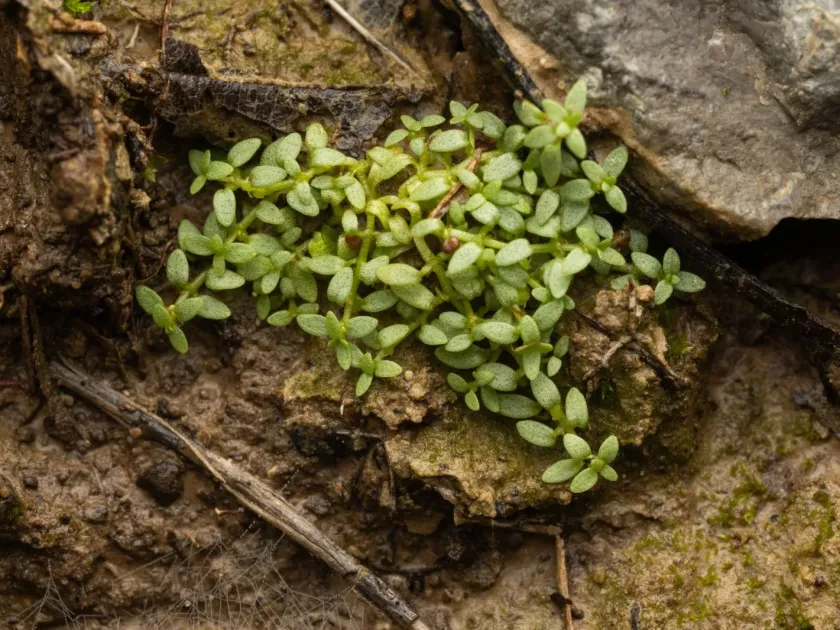
Callitriche terrestris, commonly known as terrestrial starwort, belongs to the Plantaginaceae family. Unlike its aquatic relatives, this species has adapted to live exclusively on damp, terrestrial surfaces, showing remarkable morphological plasticity.
The plant features slender, prostrate stems and small, light green leaves. It grows in dense, mat-like clusters, which makes it an interesting choice for specific shaded, humid areas where other ground covers might struggle.
Climatic requirements are specific to regions with high atmospheric humidity. It performs best in cool to moderate temperatures, strictly avoiding direct intense sunlight that could dehydrate its delicate vascular tissues.
Soil requirements involve a high moisture retention capacity. The ideal medium is a well-drained but consistently moist organic soil, rich in nutrients, with a slightly acidic to neutral pH balance to support optimal development.
Agronomic management focuses on preventing desiccation. Consistent irrigation is essential to maintain the structural integrity of the plant, especially during the peak growing season when evaporation rates are higher.
Main diseases and pests
Common plant threats include fungal infections like downy mildew, which thrive in stagnant, humid environments. Maintaining adequate air circulation is vital to prevent leaf decay and systemic fungal attacks.
Pests such as slugs and snails pose a significant danger to the succulent foliage of the terrestrial starwort. Integrated pest management strategies, such as physical barriers, are recommended to protect the crop.