
Water starwort
Callitriche regis-jubae
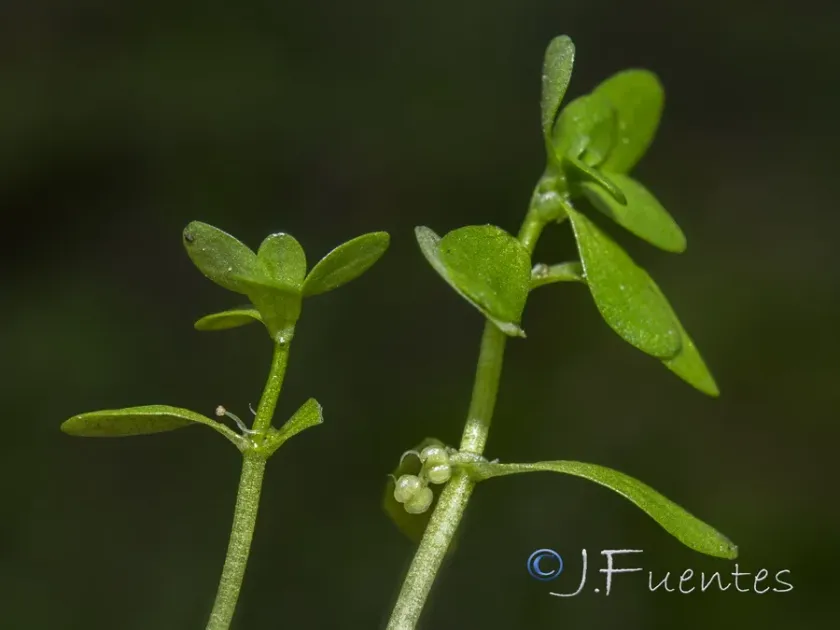
Description
Growing requirements
Water starwort (Callitriche regis-jubae) is an aquatic plant belonging to the Callitrichaceae family. It is widely recognized for its delicate foliage and its role in oxygenating freshwater environments.
The species is indigenous to temperate regions, typically found in calm streams, ponds, and shallow ditches. It is highly adapted to fluctuating water levels, which defines its spatial distribution.
Successful cultivation depends heavily on water quality. Clear, nutrient-balanced water with moderate mineral content is essential for the healthy development of its stems and leaves.
The plant requires stable substrate conditions, preferably silty soils that provide a firm anchorage for its root system. It thrives in locations where there is minimal sediment disturbance.
Adequate sunlight exposure is vital for the photosynthesis of submerged parts. In agricultural pond management, shading should be controlled to prevent the overgrowth of competing algae species.
Main diseases and pests
The primary threats include fungal infections that manifest during periods of poor water circulation. Stagnant water often leads to the decay of the lower leaves and stem tissue.
Pests such as aquatic larvae and specific types of pond snails can inflict significant damage on the foliage, which reduces the overall density and biomass of the stand.
Invasive algae are a major competitive threat. They often bloom in response to nutrient loading, effectively outcompeting water starwort for light and essential dissolved resources.
Rapid changes in water chemistry, specifically sudden increases in nitrates or toxic industrial run-off, can lead to the systemic collapse of the plant population within a short timeframe.
Drying out during extreme heat waves is a critical risk factor, as the species lacks the necessary adaptations to survive prolonged exposure to dry air and desiccation.