
Water starwort
Callitriche platycarpa
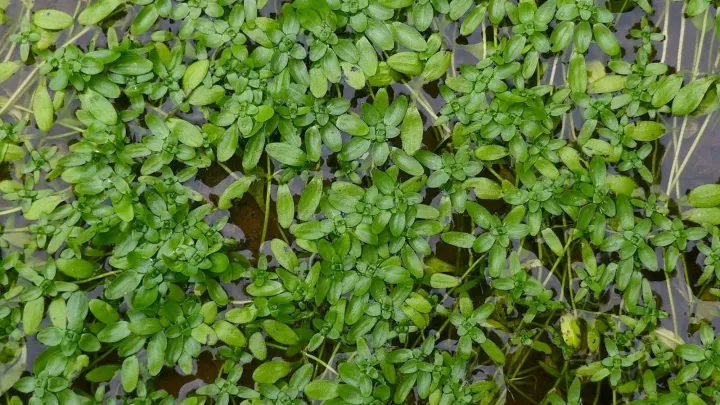
Description
Growing requirements
Water starwort (Callitriche platycarpa) is a specialized aquatic plant belonging to the Plantaginaceae family. It is recognized for its high ecological plasticity, allowing it to thrive in both submerged and terrestrial conditions.
The plant requires nutrient-rich water or sediment to maintain vigorous growth. It typically prefers slow-moving or stagnant water bodies such as ditches, ponds, and shallow river margins, which are common in agricultural landscapes.
Light availability is a critical factor for Callitriche platycarpa development. The plant forms floating rosettes of leaves on the water surface to maximize photosynthetic capacity, which also provides shelter for aquatic microfauna.
Regarding climate, it is well-adapted to temperate regions, displaying consistent vegetative growth during the frost-free season. Its presence is often indicative of stable hydro-conditions and balanced water quality.
In modern water management, this plant is considered a valuable bioindicator of water quality. Its ability to absorb nitrates and phosphates makes it a candidate for natural wastewater treatment in agricultural drainage systems.
Main diseases and pests
Chemical contamination is the primary threat to water starwort populations. The influx of herbicides and pesticides from adjacent farmland significantly harms the plant's physiological development.
Competition from invasive algal species and floating weeds, triggered by high nutrient loading, often results in the displacement of Callitriche platycarpa from its natural habitat.
Dredging and intense maintenance of drainage canals pose a direct physical threat, as they destroy the submerged vegetation layers essential for the plant's life cycle.
During extreme drought, when water levels drop significantly, the plant is susceptible to desiccation and competitive pressure from terrestrial weeds that rapidly colonize the damp soil.
Fungal pathogens and water-borne diseases, often exacerbated by high water temperatures and low oxygen levels, can devastate entire clusters of the plant within a short period.