
Water starwort
Callitriche palustris
Description
Growing requirements
Water starwort (Callitriche palustris) is a small, versatile aquatic plant belonging to the family Plantaginaceae. It is native to temperate regions across the Northern Hemisphere and is commonly found in shallow freshwater habitats such as ponds, ditches, and wetlands.
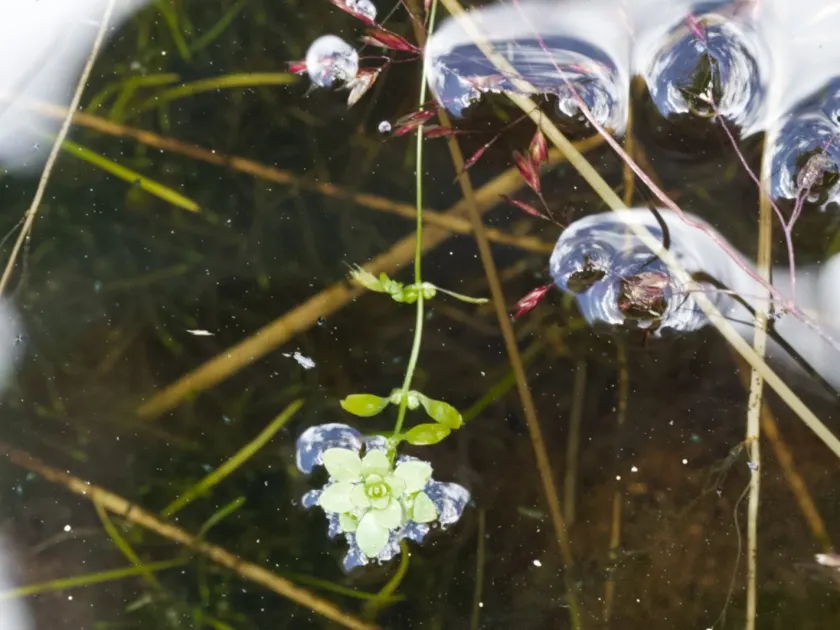
The plant exhibits heterophylly, meaning it produces different types of leaves depending on whether they are submerged or floating. Submerged leaves are narrow and linear, while floating leaves form characteristic rosettes that resemble stars, giving the plant its common name.
To thrive, Callitriche palustris requires high levels of ambient light and nutrient-rich substrate, typically composed of silt or fine sand. It is highly adaptable to water movement, though it performs best in stagnant or slow-moving freshwater environments.
Cultivation practices involve maintaining specific water chemistry parameters. It is often used in ecological engineering projects for biofiltration, as it efficiently absorbs excess nitrates and phosphates, thereby improving water quality in man-made reservoirs.
The plant is valued in aquaculture for providing cover and spawning grounds for various freshwater fish species. Its rapid growth rate during the spring and summer makes it a viable choice for natural water purification systems in agricultural setups.
Main diseases and pests
The primary threat to the stability of water starwort populations is chemical contamination from agricultural runoff, which can drastically alter the pH and mineral composition of the water, exceeding the plant's tolerance levels.
Common pests include specialized water beetles and aphids that target the floating rosettes. These infestations can lead to a significant loss of biomass and weaken the plant's ability to propagate effectively.
Fungal infections can occur under conditions of poor water circulation, leading to root rot and necrosis. Maintaining proper water flow is essential to mitigate these biological hazards in intensive cultivation environments.
Invasive algae species represent a significant competitive threat, often outcompeting water starwort for light and essential dissolved nutrients, which can lead to its eventual displacement from the ecosystem.
Effective management requires regular inspection and occasional mechanical harvesting of overpopulated areas to promote healthy growth and prevent the accumulation of decaying organic matter that encourages disease.