
Callitriche lusitanica
Callitriche lusitanica
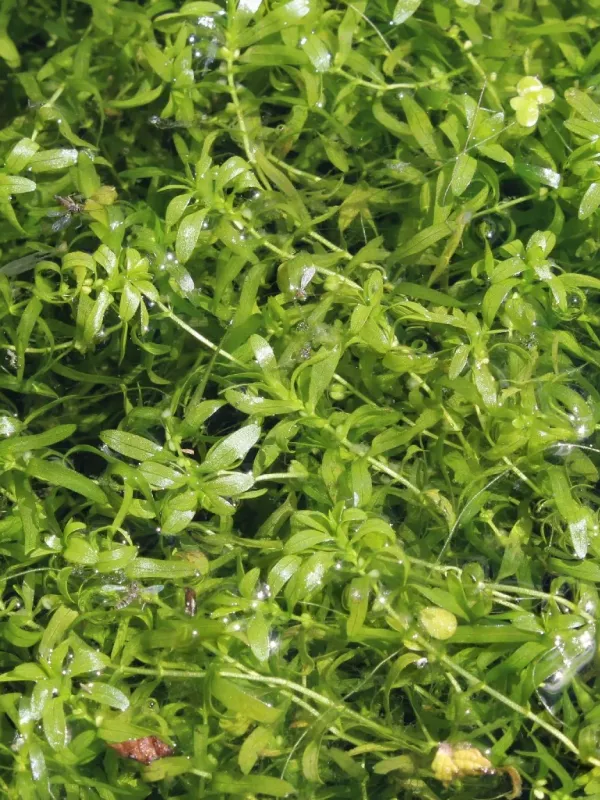
Description
Growing requirements
Callitriche lusitanica is an aquatic herbaceous plant belonging to the Plantaginaceae family. While not a conventional crop in large-scale agriculture, it is a significant species in the context of aquatic botany and wetland management.
The origin of this species is primarily associated with Western Europe, specifically the Iberian Peninsula. It naturally thrives in freshwater environments, including ponds, slow-moving streams, and marshy areas where the water remains relatively stable throughout the growing season.
Botanically, the plant features slender stems and dimorphic leaves; the submerged leaves are thin and linear, while the floating leaves are often broader and arranged in rosettes. This characteristic helps the plant optimize photosynthesis in variable water depths.
The plant requires specific environmental conditions, including clear, nutrient-rich water and sufficient light penetration. It acts as a bio-indicator of water quality, as it struggles to survive in heavily polluted or eutrophic water bodies.
In terms of practical application, Callitriche lusitanica is utilized in aquaculture and ornamental pond maintenance to facilitate oxygenation. Its presence contributes to the overall stability of aquatic ecosystems and supports micro-fauna diversity.