
Calamus thwaitesii
Calamus thwaitesii
Description
Growing requirements
Calamus thwaitesii is a prominent species of rattan palm belonging to the Arecaceae family. It is native to the humid tropical forests of India and Sri Lanka, where it grows as a climbing vine, utilizing canopy trees for structural support.
The plant thrives in regions characterized by high temperatures and consistent rainfall throughout the year. It requires a humid environment to maintain leaf turgidity and active physiological growth, making it unsuitable for arid climates.
Soil requirements include well-draining, nutrient-rich substrates, often found in alluvial plains or valley bottoms. While the plant likes moisture, it is sensitive to prolonged waterlogging, which can cause root asphyxiation and eventual plant death.
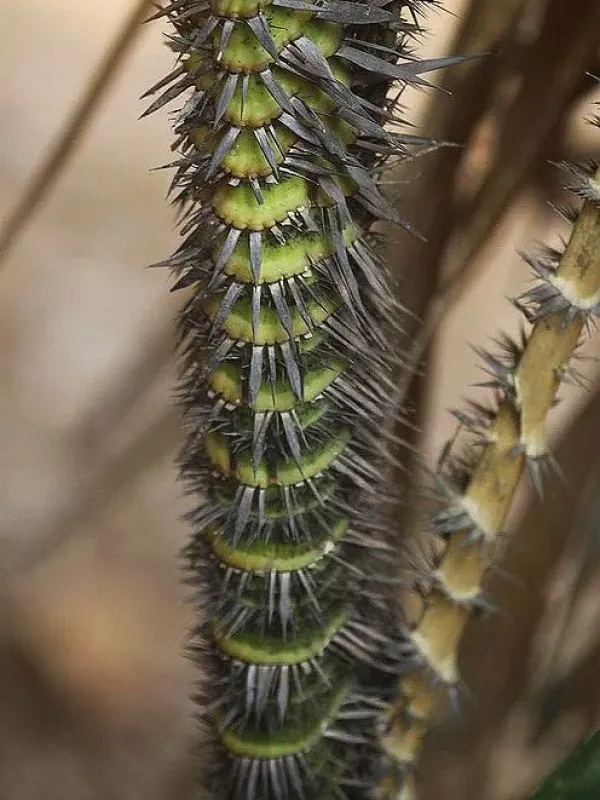
Botanically, this species is noted for its extremely long, slender, and flexible stems. The stems are armed with sharp, recurved spines that serve as an anchor in the wild, though they represent a challenge during harvest and handling.
The primary economic application of Calamus thwaitesii is the production of high-quality rattan. Its canes are harvested, treated, and processed into furniture, flooring, and various handicraft products due to their exceptional durability and strength.
Main diseases and pests
The cultivation of this rattan species faces challenges from various stem-boring insects. These pests create internal tunnels in the cane, which significantly compromises its structural integrity and market value for furniture making.
Fungal pathogens are a major threat, particularly in crowded nurseries where airflow is limited. Pathogens targeting the root zone can cause rapid decline, necessitating strict sanitation practices and optimal planting spacing.
Over-harvesting in natural habitats is a significant ecological concern. Sustainable management through established agroforestry systems is the only viable method to continue utilizing this resource without causing species decline.
Young palms are highly susceptible to competition from aggressive pioneer species. Proper field management, including periodic weeding and clearing, is essential to ensure that the slower-growing rattan palms receive sufficient nutrients and light.
Integrated Pest Management (IPM) is highly recommended to protect the crop. This involves monitoring pest cycles and using biological controls to minimize the need for synthetic chemicals, which is crucial for maintaining the environmental certification of the rattan harvest.