
Calamus merrillii
Calamus merrillii
Description
Growing requirements
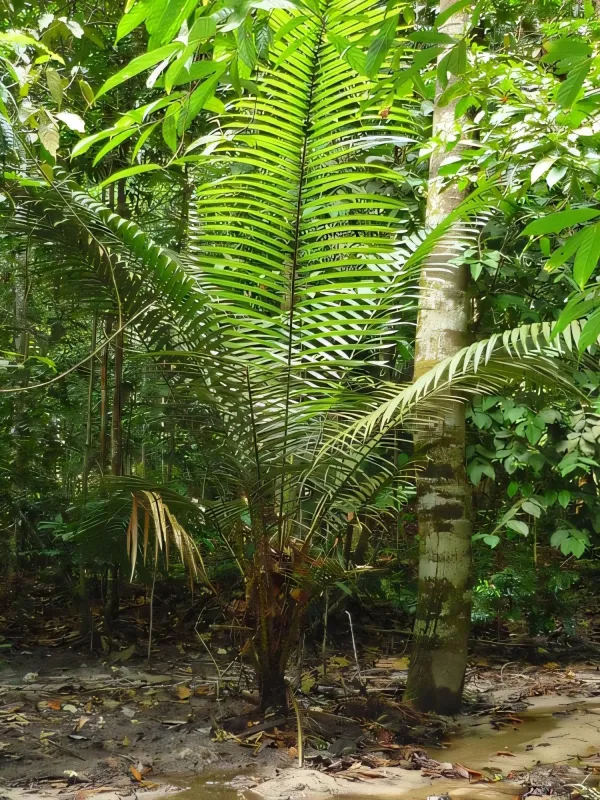
Calamus merrillii is a distinctive climbing palm species belonging to the Arecaceae family. Endemic to the Philippines, this plant thrives in the dense, humid environments of tropical rainforests, acting as a structural component of the understory.
The climate requirements for this palm are stringent, necessitating consistent warmth and high humidity levels throughout the year. It performs best in areas where average temperatures remain between 24°C and 30°C, as it lacks the physiological mechanisms to withstand freezing or prolonged cold snaps.
Soil quality is paramount for the rapid development of the stems. The species prefers deep, nutrient-rich soils that have high organic content. Effective drainage is essential, as saturated, stagnant soils can cause root rot, which significantly hampers the growth rate of the palm.
Botanically, the plant is characterized by long, slender, yet incredibly sturdy stems that utilize thorns as a strategy to climb vertically toward the canopy. Its leaves are pinnate and heavily armed with spikes, which serve as protection and assist in anchoring the plant to host trees.
Successful agricultural management involves providing adequate support structures early in the plant's lifecycle. Weed control is also crucial, as competition for soil nutrients and light in the initial years can significantly reduce the overall yield of high-quality cane per hectare.
Harvesting
The primary economic value of Calamus merrillii lies in the production of rattan, a versatile material widely used in furniture manufacturing. The durability and flexibility of the canes are highly prized by craftsmen for creating intricate, load-bearing structures.
Harvesting involves the selective extraction of mature stems from the forest or plantation. This process is highly labor-intensive, requiring specialized skills to navigate the thorny growth and extract long lengths of intact cane without damaging the environment.
Post-harvest processing is a critical stage that includes the removal of the outer sheath, washing, and drying of the canes. These steps ensure that the material is free from pests and moisture-induced decay before it enters the industrial supply chain.
Grading criteria for the canes include diameter consistency, flexibility, and the absence of physical blemishes. Higher-grade canes are destined for high-end furniture and architecture, while secondary grades are utilized for smaller domestic products.
Sustainable cultivation and harvesting practices are essential to the long-term viability of this industry. Proper management ensures that the plant population remains healthy, allowing for repeated harvests over the lifespan of the plantation or forest area.