
Calamus javensis
Calamus javensis
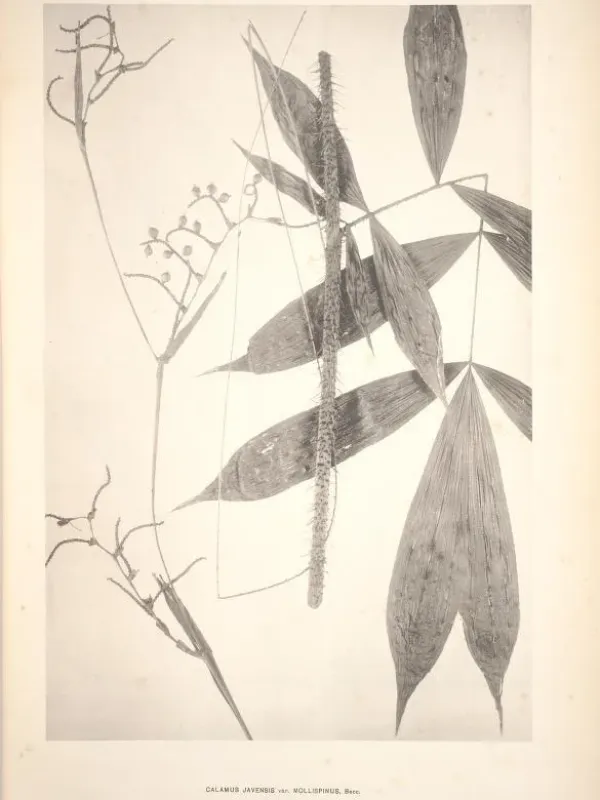
Description
Sowing dates
Propagation of Calamus javensis is primarily achieved through seeds, which must be sown immediately after harvesting due to their rapid loss of viability. Fresh seed selection is critical for high germination rates.
The seeds require a warm environment, ideally between 25 and 30 degrees Celsius, to sprout successfully. Maintaining constant soil moisture is essential, provided that the growing medium is well-drained to prevent seed rot.
In nursery conditions, shading is necessary for young seedlings to protect them from excessive heat and direct sunlight. Gradually acclimatizing the plants to ambient conditions improves their survival rate after transplanting.
Field transplanting is best performed at the onset of the rainy season. This timing ensures that young plants receive sufficient natural hydration to establish their root systems before the onset of drier conditions.
Planting density is adjusted based on the intended use; closer spacing encourages the rattan palms to grow taller and straighter, which is highly desirable for high-quality cane production.
Growing requirements
Calamus javensis belongs to the Arecaceae (Palm) family and is a climbing species naturally found in the tropical rainforests of Southeast Asia. It thrives in high-humidity environments with stable temperatures.
High relative humidity, ideally above 70%, is mandatory for the healthy development of this species. In cultivation, it requires a climate that mimics the tropical jungle conditions where it originates.
The soil should be rich in organic matter, loose, and possess excellent drainage properties. While it requires consistent moisture, the roots must not be subjected to waterlogging, as this leads to decay.
Diffuse sunlight is preferred over direct exposure. In its natural habitat, the plant grows under the canopy, meaning it is adapted to moderate lighting; excessive exposure can damage foliage.
Balanced fertilization, particularly with nitrogen and potassium, is essential to sustain the rapid vegetative growth required for the commercial production of long, flexible stems.
Yield
The primary economic output of Calamus javensis is the long, durable stem known as rattan. The yield is measured by the total length and quality of the canes harvested from the plantation.
Productivity is largely dependent on proper management, including timely weeding, nutrient application, and protection from pests. A well-maintained plantation can provide consistent yields for many years.
While the primary focus is on the stems used for furniture and weaving, the fruit may occasionally be harvested, though it represents a minor portion of the overall commercial value.
High-quality rattan is defined by its uniformity, flexibility, and lack of structural defects. A successful harvest relies on selecting stems that have reached the ideal thickness without becoming overly brittle.
Efficient processing of the harvested canes is crucial for maximizing return on investment. Standardized grading systems help categorize the stems for various industrial and artisanal applications.
Main diseases and pests
Scale insects and mealybugs are the most prevalent pests, as they infest the leaves and stems, sucking the sap and weakening the plant structure, which subsequently reduces the quality of the cane.
Fungal pathogens such as leaf spot diseases are common in poorly ventilated, overly humid environments. These can cause premature leaf drop and negatively impact the overall vigor of the plantation.
Root-knot nematodes pose a significant risk to young plantations, often causing stunted growth. Soil preparation and sanitation are the primary defenses against these microscopic soil-borne threats.
Mechanical damage during harvesting or maintenance can lead to fungal infections. Ensuring that all tools are sterilized and cuts are made cleanly can mitigate the risk of pathogen entry.
Integrated pest management, including monitoring and the use of targeted biological controls, is highly recommended to keep infestations below economic injury levels without over-relying on pesticides.
Harvesting
Harvesting Calamus javensis is a selective process that typically begins 5 to 7 years after planting. Only mature stems that have reached the required diameter are cut for commercial use.
Field workers must wear protective gear because the stems and leaves are covered in sharp, recurved thorns. Careful handling is required to prevent personal injury during the cutting phase.
After being cut at the base, the stems are stripped of their leaves and the outer sheath. This primary cleaning is essential for preparing the rattan for further processing and quality sorting.
Thermal treatment, often involving steam or boiling, is used to stabilize the canes, improve their flexibility, and remove surface moisture to prevent mold and insect attack during storage.
Once processed, the canes are bundled according to their length and thickness. Proper storage in a dry, ventilated area is vital to maintaining the material's strength and value before it is sold.