
Brunia sphaerocephala
Brunia sphaerocephala
Description
Growing requirements
Brunia sphaerocephala is an evergreen shrub belonging to the Bruniaceae family. Native to the Cape region of South Africa, it is widely recognized for its unique, globular inflorescences which are highly valued in the global flower market.
Cultivation requires well-draining, sandy, or stony soil with low nutrient levels. The plant is specifically adapted to acidic soil conditions, and any attempt to grow it in heavy or alkaline soil usually results in poor plant vigor.
Climate requirements include a Mediterranean-like environment with mild temperatures. The species is not frost-tolerant and requires controlled environments, such as greenhouses, when cultivated in temperate climate zones.
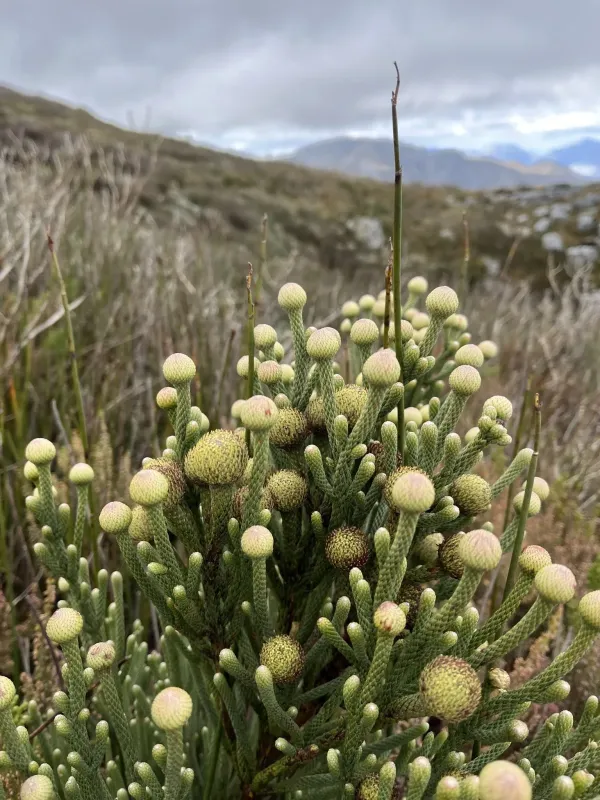
Botanically, the plant features needle-like leaves that provide a dense, silver-toned texture. The inflorescences are distinct spherical heads that maintain their shape and integrity even after being harvested and dried for floral arrangements.
Agronomic management relies on precise irrigation control. Because Brunia is susceptible to root rot, the substrate must be allowed to dry out slightly between waterings, and good airflow is critical to prevent moisture buildup around the foliage.
Main diseases and pests
Disease pressure on this crop is largely managed through moisture control. Root rot and damping-off are the most frequent issues, caused by overwatering or poor drainage in the potting mix.
Pest infestations, particularly spider mites and mealybugs, can be problematic in greenhouse settings with low humidity. A balanced approach using preventive scouting and targeted biological controls is recommended to maintain crop health.
Harvesting
The primary commercial use of Brunia sphaerocephala is in the floral industry as a premium cut flower and dried element. Its ability to retain its color and rigid spherical form makes it a staple for luxury bouquet compositions.
Harvesting is performed once the spherical flower heads have reached maturity and become firm to the touch. The stems are typically cut and hung upside down in a cool, dark, and well-ventilated area to ensure perfect preservation.