
Brunia paleacea
Brunia paleacea
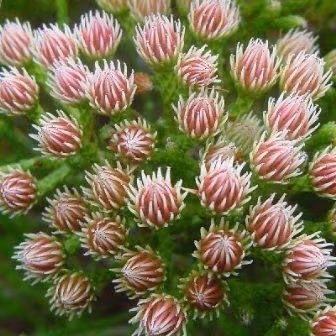
Description
Sowing dates
Propagation of Brunia paleacea is typically achieved through seeds or cuttings under controlled climate conditions. The optimal period for sowing seeds is early spring, as increasing day length acts as a catalyst for germination.
Successful germination requires a substrate with low nutrient content and excellent drainage properties. Seeds should be sown on the surface, as light is necessary for activation, and covered only with a thin layer of fine sand.
Cuttings are performed during the summer when the shoots reach the semi-hardwood stage. These cuttings are treated with rooting hormones and placed in greenhouse conditions with high humidity to maintain tissue turgor.
It is critical to maintain a stable temperature regime during the stratification or initial germination period, ideally ranging between 18 and 22 degrees Celsius.
Once the first true leaves appear, the seedlings are pricked out into individual containers with an acidic soil mix specifically suitable for the Bruniaceae family.
Growing requirements
Brunia paleacea belongs to the Bruniaceae family and is an endemic plant of the Cape Floristic Region in South Africa. In the wild, it grows in the specific conditions of the fynbos, which dictates its strict environmental requirements.
The plant prefers well-drained, acidic soils with low phosphorus content, as the root system is highly sensitive to excess fertilizer and waterlogging. Sandy or loamy soils provide the ideal environment for the shrub's development.
Climate preferences include moderately cool winters and warm, but not excessively hot, summers. The crop has low tolerance for hard frosts, making it suitable for greenhouse or container cultivation in regions with harsher climates.
High light intensity is required year-round for optimal development. Insufficient light leads to stretched shoots and a loss of the shrub's characteristic compact, decorative form.
Irrigation must be regular yet strictly moderate. The use of hard or chlorinated water is strictly discouraged, as it rapidly leads to soil alkalization and leaf chlorosis.
Main diseases and pests
Root rot is the primary threat to Brunia, often resulting from substrate waterlogging or the use of heavy, poorly aerated soil mixtures.
The most common pests include spider mites and scale insects, which typically infest plants in closed-ground environments characterized by low humidity and poor ventilation.
For pest control, systemic insecticides are recommended, though treatments should be avoided during the active flowering phase to prevent harm to beneficial pollinators.
Fungal infections, such as Fusarium, may develop under conditions of sudden temperature fluctuations combined with excessive humidity, necessitating timely treatment with fungicides.
Disease prevention relies on consistent ventilation of the planting area and maintaining an optimal air humidity balance, avoiding direct water contact with the plant's vegetative parts.
Harvesting
The commercial use of Brunia paleacea is primarily focused on professional floristry, where it is highly valued as a spectacular dried flower and material for creating textured bouquets.
Harvesting of the inflorescences occurs when they are at their densest and most vibrant, ensuring they maintain their decorative appeal long after being cut.
The cut stems undergo careful drying in shaded, well-ventilated areas, which prevents the bleaching of the natural color of the scale-like foliage.
There is consistent demand for this species among interior designers due to the plant's unique appearance, resembling small cones, which fits harmoniously into modern minimalist compositions.
Properly dried Brunia can maintain its commercial quality in dry arrangements for several years, making it a profitable crop for specialized horticultural farms.