
Brunia noduliflora
Brunia noduliflora
Description
Growing requirements
Brunia noduliflora, belonging to the Bruniaceae family, is a perennial shrub native to the Western Cape of South Africa. It is a highly specialized plant adapted to fynbos vegetation, requiring specific environmental conditions for successful cultivation.
The species demands well-drained, acidic to neutral sandy soils. It is critical to provide excellent aeration for the root system, as this plant is highly susceptible to root-pathogen proliferation in compacted or waterlogged soils.
Climate requirements include a Mediterranean-type environment with mild, wet winters and warm, dry summers. The plant thrives in full sun exposure, which is necessary to maintain the compact growth habit and proper development of its characteristic flower heads.
Watering must be carefully managed. While the plant is drought-tolerant once established, nursery and commercial production settings require consistent moisture levels without allowing saturation of the growing medium.
The nutritional needs of this culture are unique; it is highly sensitive to phosphorus levels in the soil. Fertilization strategies should prioritize low-phosphorus inputs, as this aligns with the plant's evolutionary adaptation to nutrient-poor soils.
Harvesting
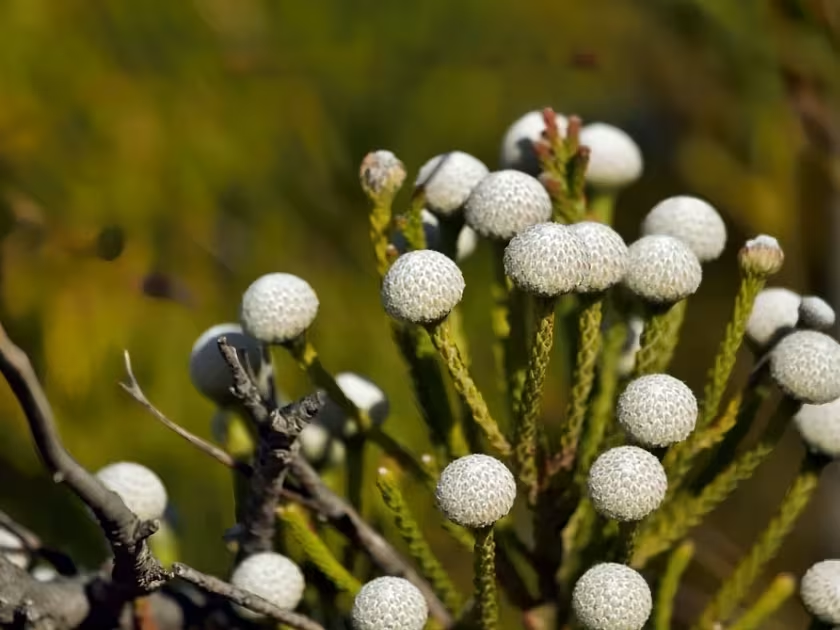
Brunia noduliflora is commercially cultivated primarily for the cut flower industry. Its unique, globe-shaped inflorescences provide a distinct texture that is highly sought after by floral designers for premium-quality arrangements.
Harvesting is performed by cutting the stems once the inflorescences are fully formed and firm. The timing of the harvest is crucial to ensure the longevity of the stems post-harvest, especially for export markets.
Post-harvest handling involves careful sorting and hydration. The stems are typically cleaned, bunched, and stored in a cool environment to maintain quality before shipping to distribution centers or floral wholesalers.
Due to the long-lasting nature of the flower heads, this crop is also processed into dried stems for the preserved floral market. Proper air-drying techniques help retain the color and architectural structure of the inflorescences.
Successful management of a Brunia plantation requires regular pruning. This practice not only shapes the shrub but also stimulates the production of secondary shoots, effectively increasing the yield per plant in subsequent harvest cycles.