
Brachychiton discolor
Brachychiton discolor
Description
Sowing dates
Propagation of Brachychiton discolor is typically achieved through seeds or stem cuttings. Seeds are sown in well-drained substrate in early spring, maintaining temperatures between 20–22 degrees Celsius.
Before sowing, seeds should be soaked in warm water to improve germination rates. A light, sandy, and peat-based medium provides the ideal environment for initial root development.
Germination can be irregular, so maintaining consistent moisture without waterlogging is crucial. Excess water can lead to damping-off disease among the young seedlings.
Transplanting seedlings into individual containers should be performed once the first set of true leaves develops. Careful handling of the root system is essential to prevent shock during the transfer process.
The plant exhibits a slow growth rate, requiring consistent watering and balanced fertilization in the early stages to establish a strong trunk and healthy canopy structure.
Growing requirements
Brachychiton discolor belongs to the Malvaceae family and is native to the eastern regions of Australia. As a heat-loving species, it thrives in full sun exposure for optimal growth.
The ideal soil profile consists of loose, fertile, and well-drained sandy loam. Poor drainage is detrimental to the plant, often causing root asphyxiation and eventual tree death.
Climate requirements include regions with warm summers and mild winters, as the tree is sensitive to heavy frost. When grown in open landscapes, it acts as a majestic ornamental specimen.
The tree demonstrates significant drought tolerance due to its physiological adaptation of storing water within its thickened trunk, a feature common in many members of its family.
Routine maintenance includes sanitary pruning during the dormant season to remove dead or overlapping branches, which improves air circulation and plant health.
Main diseases and pests
The primary concern for Brachychiton discolor is fungal root rot, usually resulting from over-irrigation or heavy, compacted soil. Proper soil management is the best preventative measure.
Pests such as scale insects and mealybugs frequently target the foliage and succulent stems. These pests weaken the tree by extracting sap and producing honeydew that attracts secondary fungi.
Spider mites can become a significant issue during dry and hot weather. Monitoring the underside of leaves and applying biological or chemical acaricides helps keep populations under control.
Leaf spot diseases may occur if humidity remains too high and airflow is restricted. Keeping the crown open through selective pruning is an effective agronomic strategy against fungal outbreaks.
Regular visual inspections and the use of integrated pest management (IPM) techniques ensure the longevity and health of the tree in both nursery and landscape settings.
Harvesting
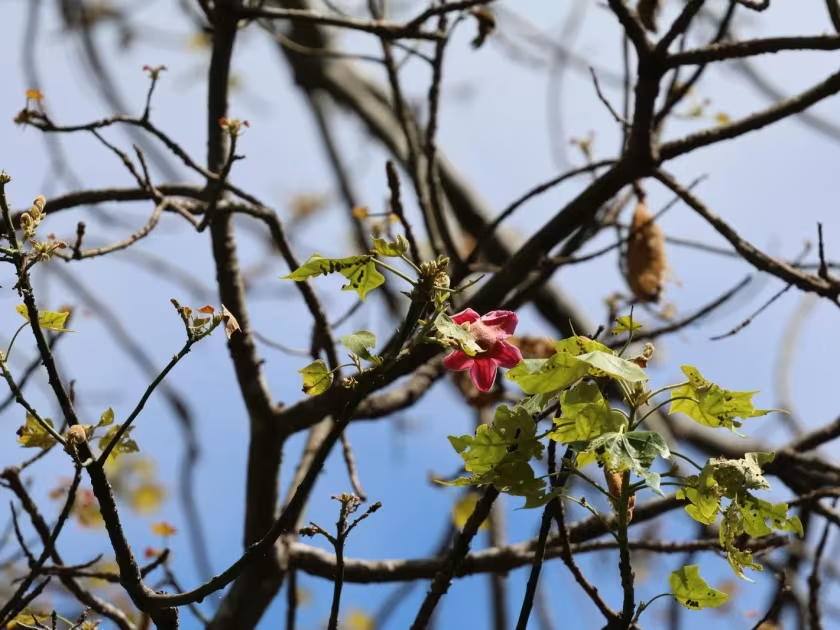
The primary economic use of Brachychiton discolor is within the ornamental nursery and landscaping sectors, valued for its striking, large pink-to-magenta flowers.
Seed harvesting involves collecting mature, woody follicles once they have begun to dry on the tree. Proper harvesting timing is essential to ensure high seed viability for the following cycle.
The wood of this tree is soft and relatively porous, generally lacking commercial value in construction. However, it is occasionally utilized for small-scale woodcrafts in its native range.
Post-harvest management involves clearing debris from the tree's base to prevent pathogen buildup. Maintaining a clean growing environment is essential for long-term tree health.
Investment in this crop remains stable in regions with suitable climates, where it serves as a premiere choice for urban beautification and large-scale garden planting projects.