
Australian Bottle Tree
Brachychiton australis
Description
Growing requirements
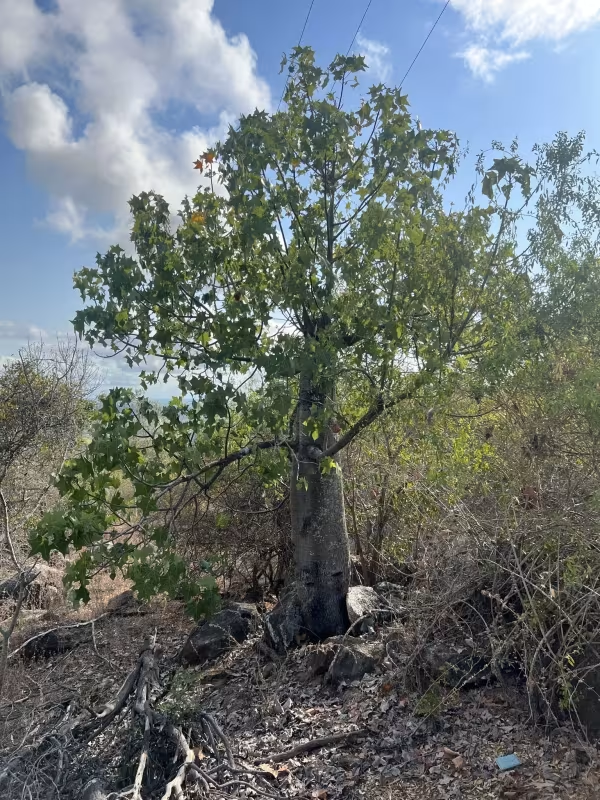
The Australian Bottle Tree (Brachychiton australis) belongs to the Malvaceae family. It is a striking tree known for its swollen trunk, which acts as a water storage organ, allowing the plant to thrive in challenging environments.
Native to the tropical and subtropical regions of Australia, this species is well-adapted to hot, arid conditions. It is frequently utilized in landscape architecture due to its unique appearance and high tolerance for heat and sun exposure.
The plant requires full sun to maintain its structural integrity and health. In terms of soil, it demands excellent drainage, as the species is highly susceptible to root rot if the substrate remains saturated for extended periods.
Ideal soil for cultivation should be sandy or loamy with a balanced pH. Incorporating inorganic materials like perlite or grit is recommended to ensure that water drains freely away from the root ball, preventing stagnation.
Temperature management is key; while the tree is relatively hardy, it prefers consistent warmth. During winter, it should be protected from freezing temperatures, especially when grown in containers, to ensure it remains in good vegetative condition.
Main diseases and pests
The most significant threat to the Australian Bottle Tree is root rot caused by poor drainage and overwatering. Ensuring the soil is well-aerated and that water passes through the container quickly is essential for prevention.
Pests such as spider mites can infest the foliage, particularly in environments with low humidity. Regular misting or monitoring for early signs of infestation can help manage these pests before they cause extensive damage.
Scale insects and mealybugs are also known to colonize the branches and leaves. These pests feed on plant sap, and if left untreated, they can lead to leaf yellowing and stunted growth of the younger specimens.
Environmental stress, such as insufficient light or drastic temperature fluctuations, weakens the tree's immune system, making it more susceptible to opportunistic fungal diseases. Keeping the plant vigorous through proper lighting is the best defense.
Management of pests and diseases should focus on cultural controls first, such as proper spacing and cleaning of the foliage. Chemical interventions should be used sparingly and only when cultural controls fail to curb the infection.