
Blue grama
Bouteloua oligostachya (Nutt.) Torr. ex A. Gray
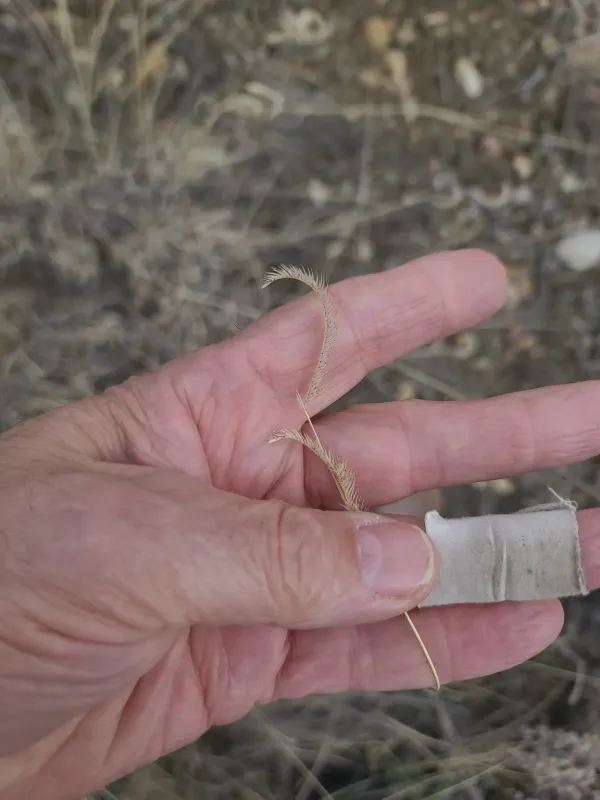
Description
Sowing dates
Planting blue grama is best done in the spring when soil temperatures reach 15–18°C, providing the optimal environment for successful seedling establishment.
A well-prepared seedbed that is free from perennial weeds is essential for young plants, which are initially slow to develop and sensitive to competition.
Seeds should be planted at a shallow depth, usually no more than 1–2 centimeters, to ensure they have enough light and soil contact to germinate effectively.
In regions with cold winters, dormant fall seeding can be a viable strategy, allowing the seeds to undergo natural stratification for improved spring germination.
Drill seeding is generally preferred over broadcasting to achieve uniform distribution and better soil coverage, leading to a more consistent stand density.
Growing requirements
Blue grama (Bouteloua oligostachya) is a perennial warm-season grass in the Poaceae family, widely recognized for its superior adaptation to arid environments.
It thrives in a variety of soil textures, including sandy, loamy, and clay soils, provided that the drainage is adequate and the soil is not prone to long-term waterlogging.
This species requires full sun exposure and does not perform well in shaded areas, making it ideal for open rangelands, pastures, and restoration projects.
Its deep and extensive root system allows it to remain productive during periods of severe drought when many other forage species enter early senescence.
The plant is highly climate-resilient, showing excellent cold hardiness in the north and extreme heat tolerance in its southern range, contributing to its widespread natural distribution.
Yield
While total dry matter production may be lower than intensive irrigation-dependent grasses, blue grama offers reliable and stable nutrition for livestock.
It maintains its forage quality well into the late season, providing a valuable source of nutrients for grazing animals even after the plant has matured.
Productivity peaks on healthy, well-managed rangelands where rotational grazing practices prevent over-utilization and allow for sufficient carbohydrate storage in the crown.
In native grassland ecosystems, it contributes significantly to the overall biomass, serving as a primary food source for both domestic and wild herbivores.
Seed production varies by year and moisture availability, but well-maintained stands can produce high-quality seed crops useful for reclamation and seeding projects.
Main diseases and pests
The primary threats to blue grama stands usually involve fungal diseases that flourish in stagnant water or areas with poor air circulation within the canopy.
Rust diseases can occasionally impact foliage quality, though this is rarely a significant problem in properly managed, non-crowded pastures.
Invasive weed species are the greatest challenge, as they can outcompete young blue grama seedlings; therefore, weed management is crucial in the first year of establishment.
Overgrazing poses a long-term risk, as it reduces the plant's ability to recover and leaves the soil vulnerable to erosion and moisture loss.
Insect pests are generally a minor concern, but monitoring for grasshoppers and leafhoppers in seed production fields is advisable to protect reproductive tissues.
Harvesting
Harvesting for hay should be timed carefully, ideally during the late boot to early flowering stage to ensure maximum digestibility and protein content.
Grazing management is the most common form of harvest, utilizing rotational systems that allow the plant time to recover and replenish its root reserves.
For seed production, harvesting is conducted when the distinctive grama seed heads turn golden-brown, using equipment that can minimize shattering losses.
The remaining stubble after haying or grazing provides important cover for the soil, protecting it against wind erosion and assisting in snow catch during winter months.
Proper management of harvest intervals ensures the longevity of the stand, allowing it to persist for many years even under extensive agricultural use.