
Sideoats grama
Bouteloua curtipendula (Michx.) Torr.
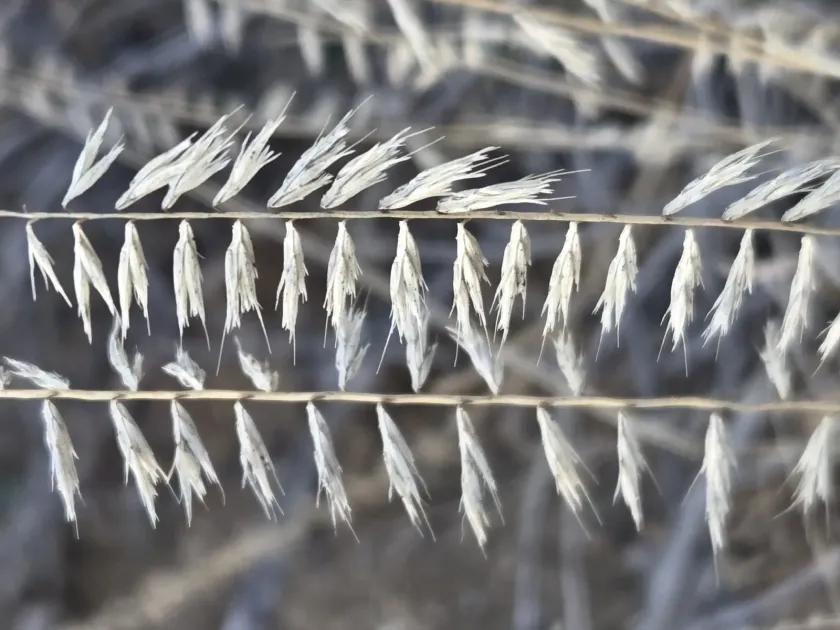
Description
Sowing dates
Sideoats grama is a warm-season perennial grass that requires warm soil temperatures for successful germination and establishment.
The optimal sowing time occurs in late spring or early summer when the danger of frost has passed and soil temperature is consistently above 18 °C.
Seeds should be planted at a shallow depth of approximately 1–2 centimeters to ensure adequate contact with moist soil while allowing light penetration.
Seedbed preparation is vital, as the seedlings are known for slow initial growth and are highly susceptible to competition from weeds.
Using certified seed and appropriate seeding rates is essential to establish a uniform stand that will persist for many years.
Growing requirements
Belonging to the Poaceae family, Sideoats grama is the state grass of Texas and a hallmark species of the North American prairies.
It is widely recognized for its superior drought tolerance and ability to thrive on rocky, sandy, or shallow soils where other grasses fail.
The species prefers well-drained locations and full sun exposure, as it performs poorly in shaded environments or waterlogged, poorly aerated soils.
It is well-adapted to a variety of soil types, showing tolerance to both slightly acidic and alkaline pH conditions, including limestone-based soils.
Climate adaptability is a key strength, as it can withstand significant temperature fluctuations and prolonged dry spells common in arid regions.
Main diseases and pests
Sideoats grama typically exhibits robust health and possesses a natural resistance to many common fungal and bacterial crop diseases.
However, excessive soil moisture during the germination phase can lead to damping-off diseases caused by soil-borne pathogens.
Insect pests, such as grasshoppers or aphids, may occasionally affect the foliage, but usually do not cause long-term economic impact.
Proper nutrient management is necessary to maintain vigor, as nitrogen deficiency can weaken the plant and make it more susceptible to environmental stress.
Integrated pest management strategies focusing on field sanitation and proper mowing height help keep the stands productive and healthy.
Harvesting
The primary agricultural use of Sideoats grama is as a high-quality forage crop for grazing livestock and for hay production.
The plant is highly regarded for its nutritional value, with foliage remaining palatable and nutritious even after maturity.
Harvesting for hay should ideally take place during the early flowering stage to ensure the highest yield of digestible proteins and minerals.
When used as pasture, it supports rotational grazing systems, provided that a sufficient regrowth period is allowed to sustain the root reserves.
Its persistence under grazing pressure makes it an excellent choice for reseeding rangelands and improving biodiversity in forage production systems.