
Hairy grama
Bouteloua hirsuta Lag.
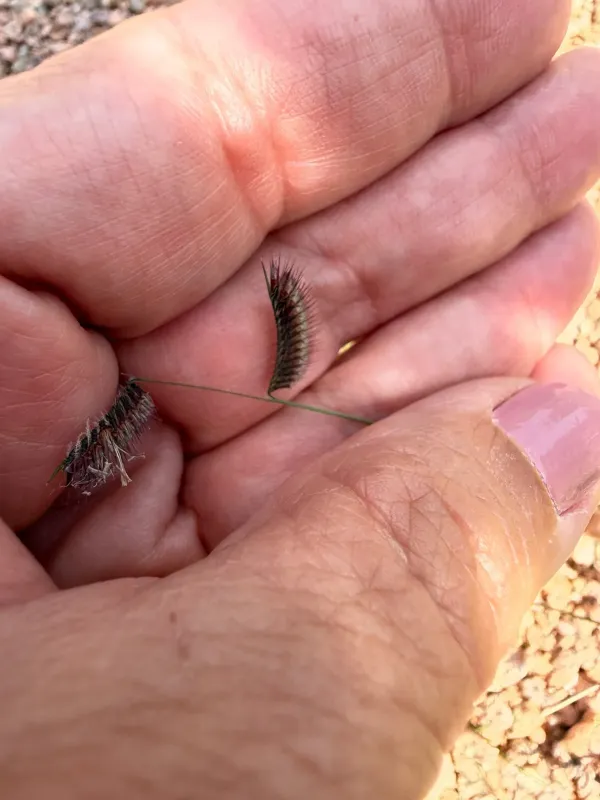
Description
Sowing dates
Hairy grama (Bouteloua hirsuta) is a perennial grass belonging to the Poaceae family. Sowing is typically conducted in the spring once the soil temperature is sufficiently warm to ensure rapid germination and early growth.
Given the small size of the seeds, planting depth is critical. The seeds should be sown at a shallow depth of approximately 0.5 to 1.5 centimeters to ensure they have enough energy to emerge while remaining protected from desiccation.
Seedbed preparation is vital for establishing a productive stand. The soil should be firm and well-prepared to maximize seed-to-soil contact, which is essential for successful germination in semi-arid environments.
Depending on the primary objective, such as pasture improvement or erosion control, seeding rates vary to ensure an appropriate density of the grass coverage during the first growing season.
Once established, the seedlings are robust; however, maintaining adequate soil moisture during the first few weeks after germination significantly increases the success rate of the stand establishment.
Growing requirements
This species is highly adapted to full-sun environments and does not perform well in shaded areas. Exposure to direct sunlight is necessary to maintain its vigor and reproductive capabilities throughout the growing season.
Hairy grama is renowned for its exceptional drought tolerance. Its root system is deep and efficient, allowing the plant to thrive in regions with low annual precipitation where other grasses might fail.
It prefers well-drained soils, including sandy, gravelly, or rocky types. It is poorly suited to heavy clay soils with poor drainage, as saturated conditions can lead to root rot and reduced stand longevity.
The grass is highly adaptable to various soil pH levels, making it a reliable choice for the reclamation of degraded lands or soils with low fertility where other forage crops struggle to survive.
The plant exhibits high cold hardiness and enters a period of dormancy during the winter months. It quickly resumes growth in the spring as temperatures rise, making it well-suited for temperate and continental climates.
Yield
Hairy grama is primarily utilized as a forage grass in rangelands and pastures. It is known for its high palatability and nutritional quality, making it a valuable feed for various species of grazing livestock.
Yields of forage vary significantly based on site productivity and management practices. In arid environments, it remains one of the most reliable sources of biomass, maintaining quality even when other grasses begin to lignify.
Rotational grazing is the recommended practice for managing this species. Preventing overgrazing during the active growth phase allows the plants to replenish their energy reserves and maintain long-term productivity.
Beyond forage, the plant is extensively used for soil conservation and erosion control. Its fibrous root system effectively binds the soil, making it a preferred choice for stabilizing slopes and disturbed sites.
When harvested for hay, it produces a high-quality forage rich in protein. However, because of its low-growing habit, efficient hay production requires specific equipment and well-timed cutting schedules.
Main diseases and pests
Hairy grama displays remarkable resistance to many common fungal diseases that affect other grass species, such as rusts and powdery mildew, which are often problematic in wetter climates.
Soil-borne pests, including larvae of ground-dwelling insects, can occasionally impact young stands during the establishment phase, but the plant generally remains resilient once mature.
Disease pressure is minimal provided that the soil drainage is adequate. Excessive moisture and poor airflow are the primary factors that might increase the susceptibility of the stand to pathogens.
In certain regions, grasshoppers or other locust-type insects can damage the vegetation during severe drought years when alternative food sources are limited, though this is rarely fatal for established stands.
To ensure long-term health, it is important to manage livestock density to prevent soil compaction, as dense soils can hinder root respiration and weaken the overall resistance of the plant community.