
Rattlesnake fern
Botrychium virginianum
Description
Growing requirements
The Rattlesnake fern (Botrychium virginianum) is a member of the Ophioglossaceae family. Unlike typical vascular plants, it is a perennial spore-bearing species that relies heavily on subterranean mycorrhizal fungi to complete its life cycle.
The plant requires moist, humus-rich soil conditions found in temperate deciduous forests. It is highly sensitive to soil disturbance and compaction, which can damage the symbiotic fungal networks essential for its nutrient uptake.
Habitat requirements include deep shade and protection from extreme temperature fluctuations. The fern is typically found in mature forest stands where the leaf litter layer remains undisturbed throughout the growing season.
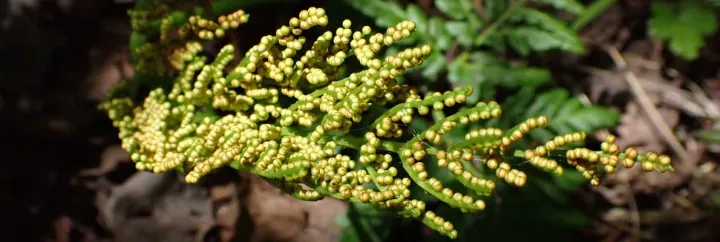
Morphologically, the plant features a single, triangular, divided leaf that supports a distinct, stalked sporangium structure resembling a rattlesnake tail. This unique organ serves the primary function of spore production and dissemination.
Due to its complex obligate relationship with fungi, the Rattlesnake fern is not suitable for large-scale agricultural production. Its status remains that of a sensitive forest species that thrives in pristine, stable woodland environments.