
Japanese moonwort
Botrychium japonicum
Description
Growing requirements
The Japanese moonwort (Botrychium japonicum) belongs to the Ophioglossaceae family. This perennial spore-bearing plant is primarily found in the forest zones and humid meadows of East Asia, including Japan, China, and parts of the Russian Far East.
It favors shaded locations with loose, well-aerated soil rich in organic matter. A key botanical feature is its obligate symbiosis with mycorrhizal fungi, which makes it extremely difficult to cultivate in conventional agricultural systems as it relies on specific soil microflora.
Environmental requirements include a stable climate with consistent humidity and protection from direct sunlight. The plant is highly sensitive to soil acidity and moisture levels, requiring a delicate ecological balance to survive and develop its unique fertile frond.
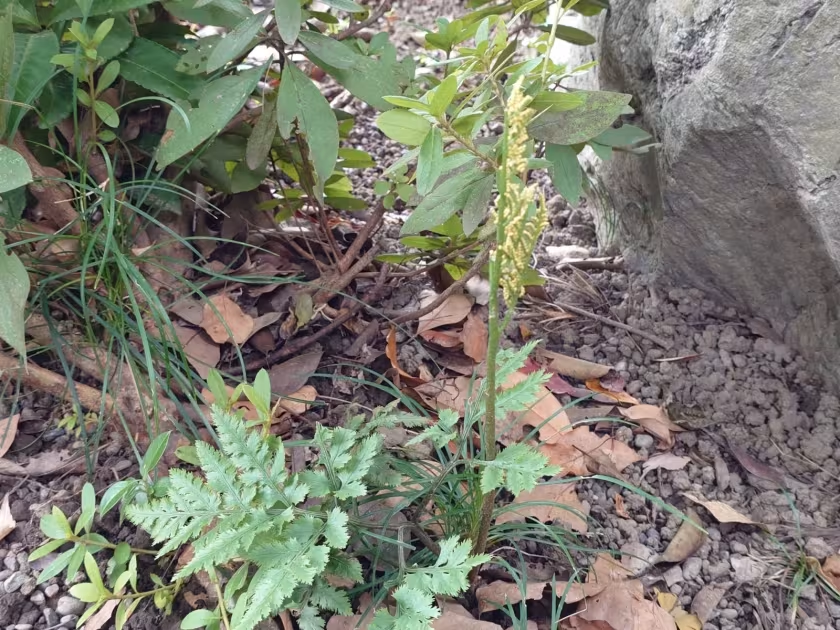
The botanical structure consists of a single frond divided into a vegetative sterile part and a grape-like fertile spore-bearing part. The root system consists of a short, fleshy rhizome lacking traditional root hairs, which reinforces its dependence on symbiotic fungi for nutrient absorption.
Currently, the Japanese moonwort is not a commercial agricultural crop. It is considered a rare or protected species in many parts of its range, and its use is limited to traditional medicinal practices where sustainable harvesting is highly regulated or prohibited entirely.
Main diseases and pests
The primary threats to the survival of the Japanese moonwort are habitat destruction and changes to the forest ecosystem. Deforestation and land development disrupt the delicate fungal networks in the soil that are essential for the plant’s nutrient uptake.
Typical biological threats include soil nematodes that can damage the rhizome system. Furthermore, excessive soil moisture often leads to root rot, which is a common fungal disease caused by poor drainage or stagnant water conditions in its natural habitat.
Because of its extreme sensitivity, the use of agricultural pesticides or herbicides in the vicinity of moonwort populations can be fatal. The plant has no natural resistance to chemical interference, and its slow growth rate prevents recovery.
The plant lacks the ability to compete with aggressive weeds or invasive flora. Any mechanical disturbance of the soil, such as tilling or heavy machinery, destroys the fungal connections, leading to the rapid decline of the affected populations.
Given its protected status in many regions, conventional pest management is not applicable. Conservation of the existing habitats remains the only viable strategy for protecting this species, as cultivation efforts remain largely unsuccessful due to complex biological requirements.