
Northern Moonwort
Botrychium boreale
Description
Growing requirements
Northern Moonwort (Botrychium boreale) is a perennial herbaceous plant belonging to the Ophioglossaceae family. It is not cultivated as an agricultural crop due to its complex biological requirements and inability to adapt to standard soil management practices.
The plant relies heavily on an underground symbiotic relationship with mycorrhizal fungi to complete its life cycle. Since its subterranean development is highly specialized, it cannot be propagated or grown in traditional farm environments.
Its natural habitat spans across arctic and alpine regions in the Northern Hemisphere. It thrives in well-drained, nutrient-poor soils found in mountain meadows, tundra, and open slopes, often where soil temperature remains relatively cool.
Environmental requirements include stable soil moisture and a lack of chemical disturbance. Because of its dependence on specific soil fungi, even minor changes in soil chemistry—such as those caused by fertilizers—are detrimental to its survival.
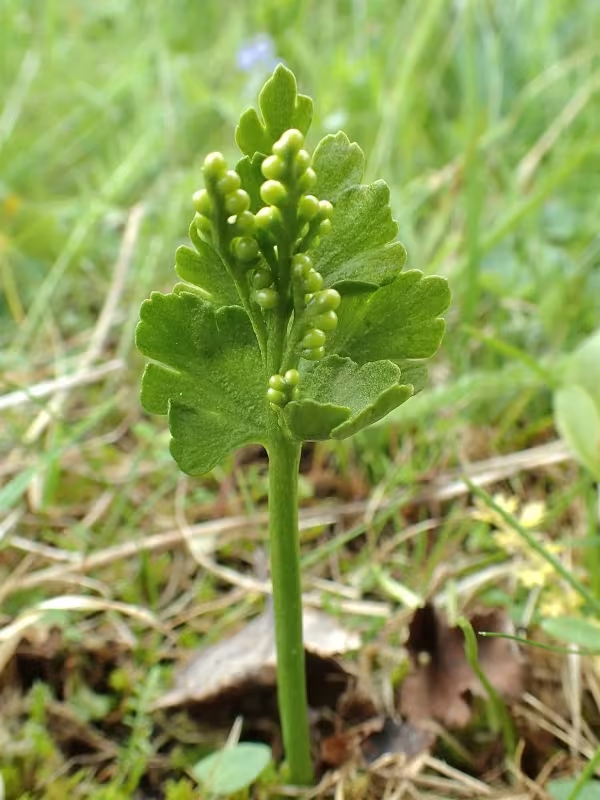
Botanically, Northern Moonwort is characterized by a single frond that divides into a sterile, photosynthetic segment and a fertile, spore-bearing segment. The plant is diminutive, rarely growing taller than 15 cm, and often remains dormant underground for years.
Main diseases and pests
The primary threats to Northern Moonwort are habitat loss and environmental changes resulting from human activity. Agricultural intensification, such as grazing or soil aeration, destroys the fragile underground structures and the fungal networks necessary for growth.
There are no known agricultural pests or diseases specifically targeting this species, as it is not a cultivated crop. Its decline is strictly linked to the degradation of the delicate mountain and tundra ecosystems it inhabits.