
Matricary grapefern
Botrychium matricariifolium
Description
Growing requirements
The Matricary grapefern (Botrychium matricariifolium) is a perennial plant belonging to the Ophioglossaceae family. While categorized as a botanical subject, it is not an agricultural crop and cannot be cultivated using standard field management practices due to its specialized life cycle.
The species relies entirely on underground mycorrhizal fungi for nutrient absorption during its long subterranean gametophyte stage. This biological dependence makes it impossible to transplant or propagate this fern in traditional agricultural settings, as it requires the specific soil microbiota found in undisturbed forest ecosystems.
In its natural habitat, the plant prefers moist, shaded locations such as temperate woodlands or sheltered meadows. It thrives in soils that are rich in organic matter but requires a very specific microclimate to prevent the desiccation of its delicate, single-frond structure, which emerges only briefly during the growing season.
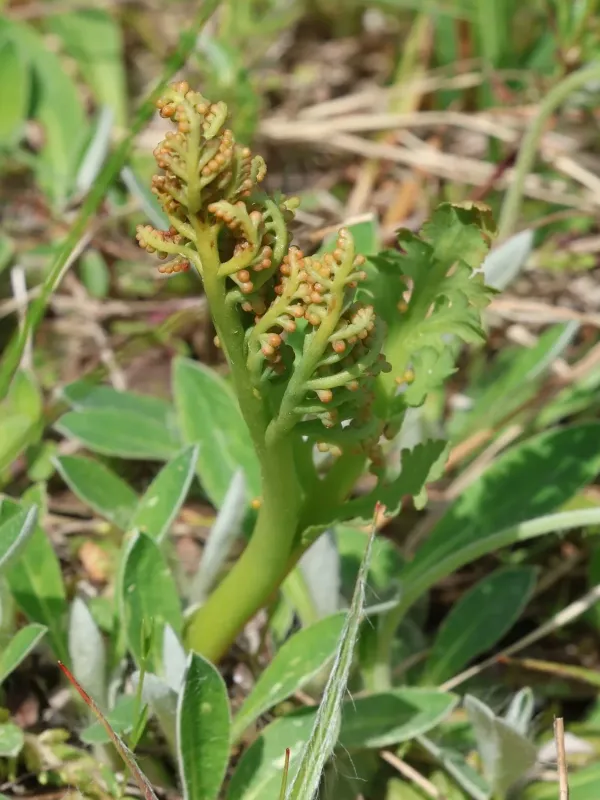
From a botanical perspective, the plant is characterized by its unique architecture: a single leaf divided into a sterile, leafy section and a fertile, branched cluster of sporangia. This structure is fragile and extremely sensitive to mechanical disturbance, such as plowing or the application of synthetic chemical fertilizers.
Because of its rarity and extreme sensitivity, the Matricary grapefern is protected under various conservation regulations. There are no commercial uses for this plant, and it serves exclusively as a bio-indicator for healthy, stable forest environments, making it a subject of interest for conservationists rather than farmers.