
Little grapefern
Botrychium simplex
Description
Growing requirements
The Little grapefern (Botrychium simplex) is a member of the Ophioglossaceae family. Unlike traditional agricultural crops, this plant is a rare perennial fern characterized by its delicate structure and highly specific ecological requirements.
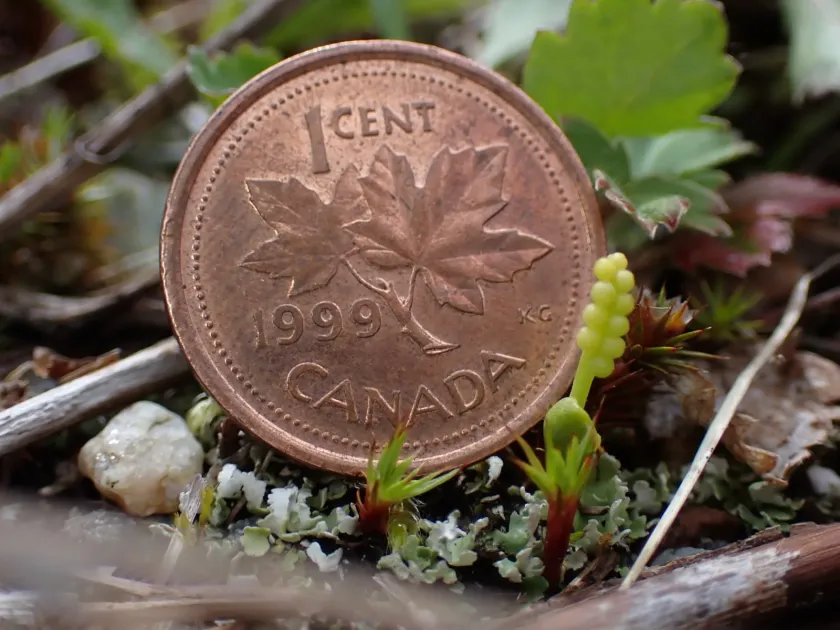
The plant consists of a single vegetative frond and a fertile sporophore arising from a common stalk. It relies entirely on a mycorrhizal relationship with specific soil fungi, which is vital for its nutrient intake throughout its life cycle.
The species is native to temperate regions across the Northern Hemisphere. It thrives in open, moist habitats such as floodplains, meadows, and sparse woodlands that maintain consistent moisture and specific microbial conditions.
Soil requirements for this species include adequate organic matter content and a balanced pH. It cannot withstand standard agricultural practices, as tilling or soil compaction destroys the fungal networks necessary for the fern's survival.
There is no commercial use for the Little grapefern. Because it is sensitive to environmental disturbances, it is protected in many jurisdictions and is not classified as an agricultural crop, nor is it suitable for cultivation.
Main diseases and pests
Human activities represent the primary threat to the Little grapefern. Land development, drainage projects, and modern intensive farming disrupt the fragile balance of the soil microbiota.
Competition from aggressive, fast-growing herbaceous species poses a significant danger. As environments change, the fern often loses its ability to compete for sunlight, leading to local population declines.
Pests and diseases are not significant factors in terms of large-scale crop damage, as the species does not grow in agricultural settings. However, soil-dwelling insects may occasionally damage subterranean tissues.
Fungal infections can occur if the local hydrologic regime is severely altered. However, the most lethal factor remains the loss of the symbiotic fungi, which occurs rapidly after any disturbance to the soil structure.
Chemical pollutants, including pesticides and fertilizers, are highly detrimental to the species. These substances alter soil chemistry, directly interfering with the plant-fungus symbiotic relationship required for existence.