
Moonwort
Botrychium lunaria
Description
Growing requirements
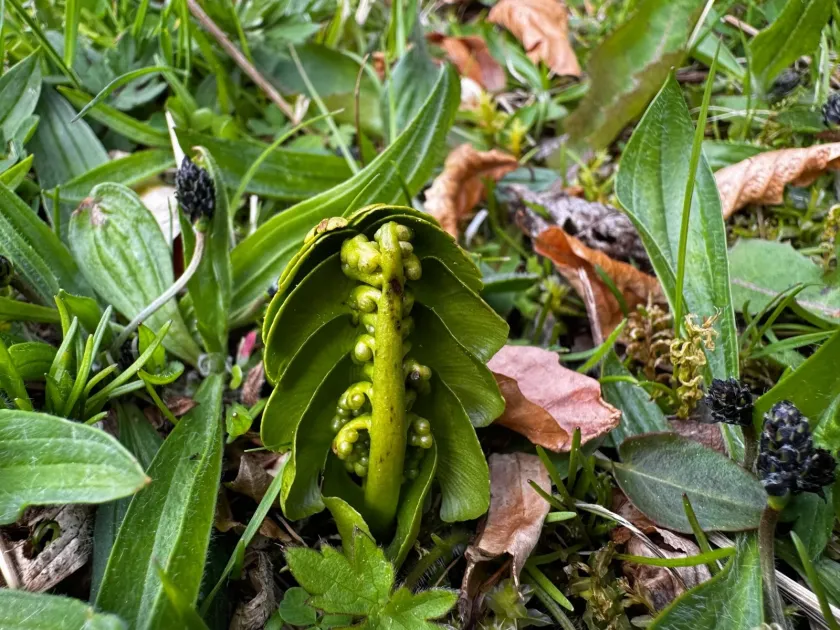
Moonwort, scientifically known as Botrychium lunaria, is a perennial fern belonging to the Ophioglossaceae family. Unlike common ferns, it has a distinct structure featuring a single fertile spike and a single sterile frond, making it a unique specimen in plant taxonomy.
The plant is naturally distributed across temperate and subarctic regions of the Northern Hemisphere. It thrives in diverse environments, including alpine meadows, calcareous grasslands, and moorlands, where it selects areas with minimal competition from taller vegetation.
A fundamental biological requirement for Moonwort is its obligate mycorrhizal association. The plant relies entirely on specific soil fungi to provide nutrients to its subterranean gametophyte, which means it cannot be cultivated in standard nursery conditions or agricultural fields.
From an agronomic perspective, this plant is not considered a crop. It lacks established commercial production methods, and there is no practical agricultural technology for its mass propagation due to the complexity of the symbiotic fungal relationships required for its survival.
Historically, Moonwort has been recognized in folklore and traditional herbalism for its alleged medicinal properties, though it is not used in modern pharmaceutical industry. It serves primarily as an indicator species for the health and biodiversity of natural grasslands.
Main diseases and pests
The main threats to the survival of Botrychium lunaria include habitat loss through agricultural intensification and land development. The alteration of soil chemistry due to chemical fertilizers destroys the delicate fungal networks essential for its growth.
Furthermore, overgrazing and the abandonment of traditional grassland management practices create conditions where competitive species quickly shade out and suppress Moonwort populations, leading to localized extinction.