
Sea clubrush
Bolboschoenus planiculmis
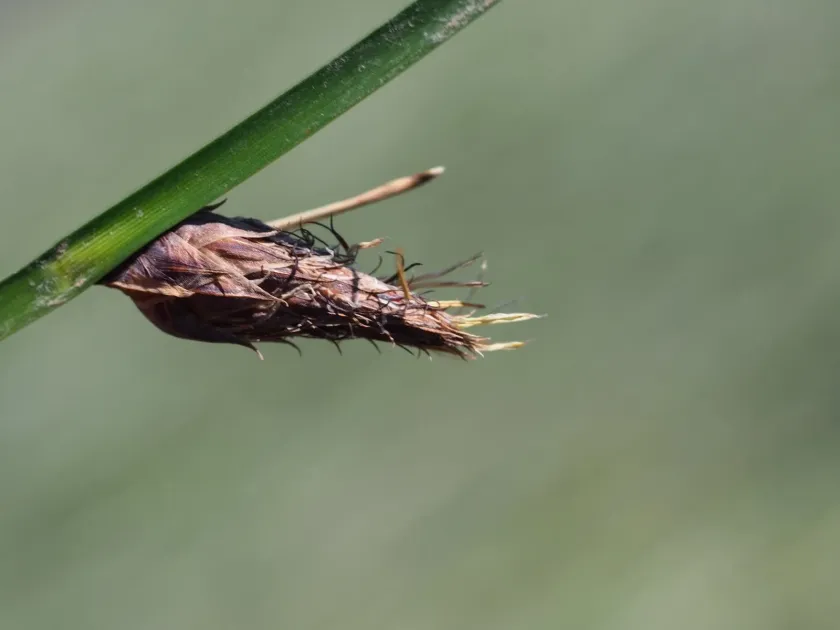
Description
Growing requirements
Sea clubrush (Bolboschoenus planiculmis) is a perennial wetland plant belonging to the Cyperaceae family. While it is an important component of natural marsh ecosystems, it is often classified as a persistent and troublesome weed in irrigated agricultural fields.
The plant is distinguished by its unique underground tubers connected by stolons. These structures store vital energy reserves, allowing the plant to remain dormant during unfavorable conditions and sprout vigorously when moisture levels become sufficient, typically in spring or early summer.
This species is native to temperate zones of the Northern Hemisphere, widely distributed across Europe and Asia. Its presence is most noticeable in rice paddies and water management infrastructure, where it creates dense stands that are difficult to eradicate with standard cultivation methods.
Regarding its habitat requirements, it thrives in wet, heavy soils such as silts and clays. It is highly adapted to hypoxic environments, showing a significant tolerance for prolonged waterlogging that would be fatal to most conventional crop plants.
In terms of economic value, it is primarily viewed as a weed, although it has historically been used in weaving or as forage material in very specific traditional agricultural settings. Modern agronomy focuses on its suppression to prevent yield losses in grain production areas.
Main diseases and pests
As a resilient hydrophyte, the sea clubrush is rarely devastated by diseases. While leaf rusts and various spots can occur in dense populations, they do not significantly limit the plant's aggressive colonization capabilities.
Invertebrate pests, such as certain beetles and stem borers, may feed on the plant. However, due to its deep-seated root architecture and fast growth rate, the plant easily outpaces any damage caused by these organisms.
The primary economic threat posed by Bolboschoenus planiculmis is its impact on crop yields. It acts as an aggressive competitor for water, sunlight, and soil nutrients, often significantly reducing the growth potential of adjacent crops.
Control strategies for professional farmers involve a combination of water management and systemic herbicide application. Draining fields at specific growth stages is essential to stress the plants and deplete their tuberous energy reserves.
Integrated weed management remains the most effective approach. By combining deep plowing, crop rotation, and precise herbicide applications, growers can manage the population density and prevent the spread of tubers to new sections of the field.