
Caldwell's bulrush
Bolboschoenus caldwellii
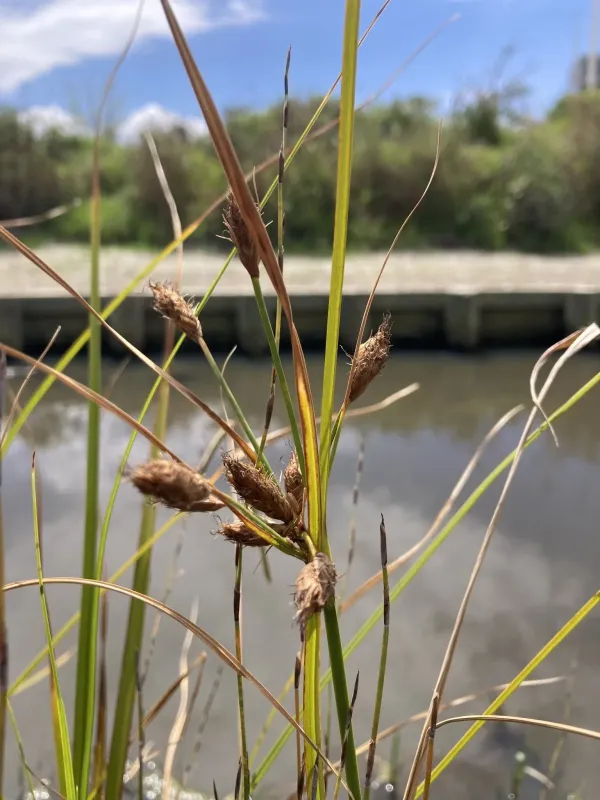
Description
Growing requirements
Caldwell's bulrush (Bolboschoenus caldwellii) is a perennial herbaceous plant belonging to the Cyperaceae family. It is recognized for its specialized root system featuring tuber-like structures, which allow it to propagate efficiently in demanding environments.
This species is native to brackish and saline coastal regions. It is highly valued in environmental science for its capacity to stabilize shoreline soils and its potential role in the phytoremediation of saline agricultural landscapes.
The plant requires high moisture levels and specific salinity ranges to thrive. Unlike typical crops, it is perfectly adapted to waterlogged soils where oxygen availability is limited, utilizing its internal structure to conduct gas exchange.
Climatic requirements involve sufficient sunlight for photosynthesis and resilience against temperature fluctuations. The plant's ability to survive in saline conditions makes it an ecological candidate for coastal zone management.
Agricultural management of this species focuses on maintaining the water table stability. Because it reproduces primarily through vegetative expansion via rhizomes, maintaining proper soil moisture is crucial for sustaining a healthy population.
Main diseases and pests
The primary threats to Caldwell's bulrush populations are habitat loss due to drainage projects and large-scale coastal development that alters the natural hydrology of its native wetlands.
Insect pests that target this plant include various specialized herbivores that feed on the vegetative parts. These infestations can weaken the plant's ability to produce robust tubers for the subsequent season.
Fungal pathogens are a common issue in dense stands, particularly during seasons with high humidity and stagnant air. These diseases often manifest as leaf spots or stem decay, affecting the plant's overall vigor.
Invasive plant species can outcompete Caldwell's bulrush if the environmental balance shifts, such as through a change in the soil's salinity levels or the introduction of nutrient-rich runoff from adjacent farmlands.
Excessive land use and heavy machinery traffic in sensitive coastal zones pose a physical threat, leading to soil compaction and the destruction of the fragile root networks essential for the plant's survival.