
Broad-fruited club-rush
Bolboschoenus laticarpus
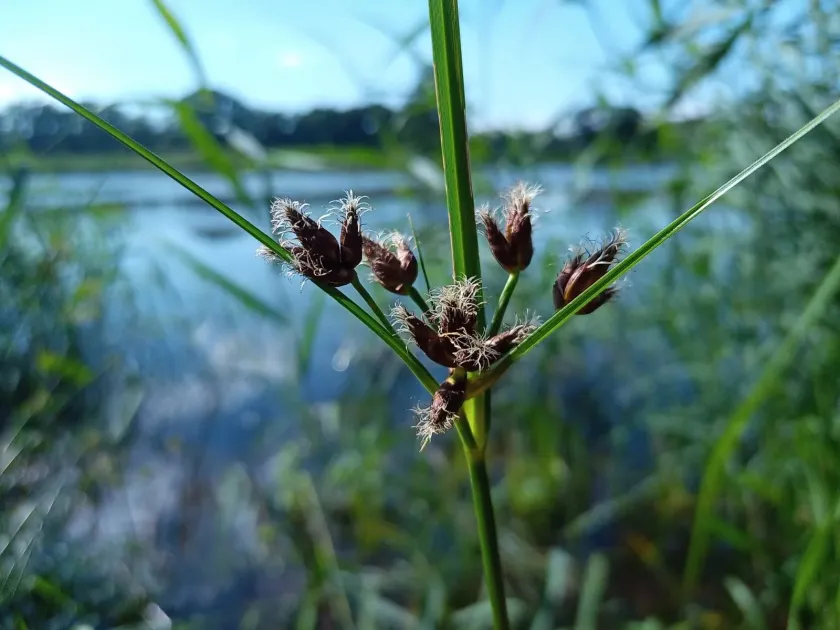
Description
Sowing dates
The reproduction of the broad-fruited club-rush in its natural habitat occurs primarily through vegetative means, using specialized underground tubers.
The optimal time for the start of growth and tuber propagation is during the spring season, when the water and sediment temperature reaches 10–12 degrees Celsius.
For cultivation or land restoration, planting material is placed in the soil early in the spring, before the active sap movement in the aerial parts begins.
Seed-based propagation is rarely utilized due to low germination rates in waterlogged environments, making tuber division the preferred method for agricultural use.
A crucial requirement for successful establishment is maintaining a stable soil moisture level, which prevents the root system from drying out during the initial growth stages.
Growing requirements
The broad-fruited club-rush belongs to the Cyperaceae family and is a typical hydrophyte, perfectly adapted to life in shallow water conditions.
The plant prefers well-lit areas with nutrient-rich silty or sandy-silty soils, frequently found along the banks of stagnant or slow-moving water bodies.
It exhibits significant tolerance to soil salinity, which makes it a promising species for phytoremediation efforts on saline agricultural lands.
The optimal depth for root system development ranges from 5 to 30 centimeters below the water surface, although the plant can tolerate temporary substrate drying.
Climate requirements include a moderately warm growing season, while its hardiness allows tubers to survive the winter safely buried in the bottom substrate.
Yield
The economic value of this crop lies in the high productivity of its aerial biomass, which can serve as non-traditional livestock fodder or industrial raw material.
The plant stores starch in its tubers, which have historically been used as a source of carbohydrates for both human consumption and technical processing.
Yields of green mass are directly dependent on population density and the availability of essential nutrients in the water-sediment interface.
Under controlled conditions in irrigation areas or specialized plantations, the plant can produce significant volumes of organic matter per unit of area.
Yield assessment requires evaluating the tuber expansion coefficient, which determines how quickly the population can colonize large water surfaces.
Main diseases and pests
While the broad-fruited club-rush is a robust species, its populations may be affected by fungal pathogens that target leaves in stagnant, humid air conditions.
Primary pests include specialized insects that feed on the tissues of sedges, as well as waterfowl that may damage tubers during the plant's dormant period.
Excessive pollution of water bodies with heavy metals or pesticides can inhibit growth and decrease the overall viability of the young shoots.
Competition from more aggressive macrophytes, such as common reeds, can lead to the gradual displacement of the club-rush from its established habitat.
Effective crop protection requires regular monitoring of the ecosystem and ensuring the water quality remains within parameters suitable for healthy plant development.
Harvesting
Harvesting of the green biomass is typically performed during the active flowering phase, when the nutritional concentration in the stems is optimal for silage production.
Mechanized harvesting is possible with the use of specialized swamp-based machinery designed to operate on soft, saturated soils without damaging the rhizomes.
Tuber harvesting is best scheduled for late autumn or early spring, when the aerial parts have died back and the plant's nutrients are concentrated underground.
After extraction, tubers must be cleaned of mud and debris and subsequently dried to ensure long-term storage and high raw material quality.
Strategic management of the harvest cycle allows for the long-term profitability of cultivating this species in various wetland ecosystems.