
Grey bulrush
Bolboschoenus glaucus
Description
Sowing dates
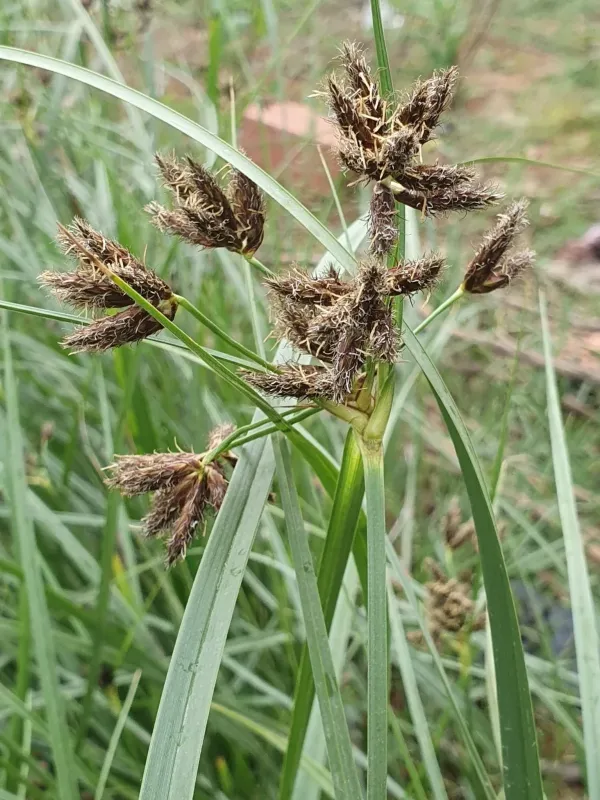
Grey bulrush (Bolboschoenus glaucus) belongs to the Cyperaceae family. It is a perennial herbaceous plant that reproduces primarily through an extensive network of rhizomes and tubers.
Seeding is rarely used in commercial cultivation due to the complex germination requirements of the seeds. Propagation is most effectively achieved by planting rhizome segments during the early growing season.
The optimal planting time is in spring, once soil temperatures stabilize above 10–12°C. Adequate soil moisture must be maintained immediately after planting to ensure successful establishment.
Rhizomes should be planted at a depth of 10–15 centimeters. Following this method encourages rapid root development and the formation of healthy shoots, which is critical for colonizing the site.
The plant demonstrates high adaptability to variable water levels, making it a robust candidate for restoration projects in managed wetland environments.
Growing requirements
As a hydrophyte, the grey bulrush has high moisture requirements. It thrives in waterlogged conditions, riverbanks, and marshy soils, showing significant tolerance to flooding.
The species prefers silt, clay, or peat-based substrates with neutral to slightly alkaline pH levels. It is notably tolerant of soil salinity, which distinguishes it from many other sedge species.
Full sun is essential for optimal biomass production. Shading significantly reduces the plant's growth rate and its ability to develop nutrient-rich tubers.
The ideal temperature for active growth ranges between 20–25°C. While the plant can tolerate fluctuations, prolonged drought is highly detrimental to its physiological health.
Effective management involves maintaining a consistent water level to prevent the root zone from drying out, which is the primary challenge in cultivation.
Yield
Grey bulrush is used primarily for shoreline stabilization and as a forage resource in areas prone to seasonal flooding. Its foliage provides a reliable source of green mass.
Yields can reach 15–25 tons per hectare in favorable conditions. Furthermore, the tubers are an excellent energy source for migratory birds and various wildlife, adding ecological value to the crop.
The plant is increasingly recognized for its role in phytoremediation, as it efficiently absorbs nitrogen and heavy metals from contaminated wetland environments.
Harvesting efficiency is highest when the biomass is gathered before the stems become overly lignified, ensuring the fodder retains higher nutritional quality for livestock.
While not a mainstream commercial crop, its use in agro-ecology is expanding due to its ability to yield significant biomass without extensive fertilizer inputs.
Main diseases and pests
This species possesses strong natural immunity to many agricultural pests. However, poor water circulation in stagnant wetlands can increase the risk of fungal infections.
Occasional damage from leaf-feeding insects and small mammals, which may target the tubers, can occur, but these threats are usually manageable under normal conditions.
The most significant threat to a population is the rapid desiccation of the habitat, which stresses the plant and leaves it vulnerable to secondary pathogens.
Fungal diseases like rust may appear on leaf blades if the environment is overly humid and stagnant, requiring basic sanitation measures to mitigate spread.
Strategic thinning of overgrown stands can help improve airflow, reducing the humidity levels around the stems and lowering the risk of disease outbreaks.
Harvesting
Harvesting green biomass is best performed at the onset of the flowering stage, using specialized machinery designed for operation in soft, moist soil conditions.
Tuber collection, if desired, is typically carried out in autumn after the aerial parts have withered. This requires equipment capable of extracting plant matter from bottom sediments.
Proper drying or ensiling of the harvested material is essential to prevent spoilage, as the high water content of the stems makes them susceptible to mold if stored incorrectly.
Sustainable harvesting practices involve leaving sufficient stubble to ensure the plant's vigor for the following season and to maintain the integrity of the soil.
Strategic management of harvesting schedules allows for a balance between maximizing forage yield and preserving the ecological function of the wetland site.