
Sea club-rush
Bolboschoenus maritimus
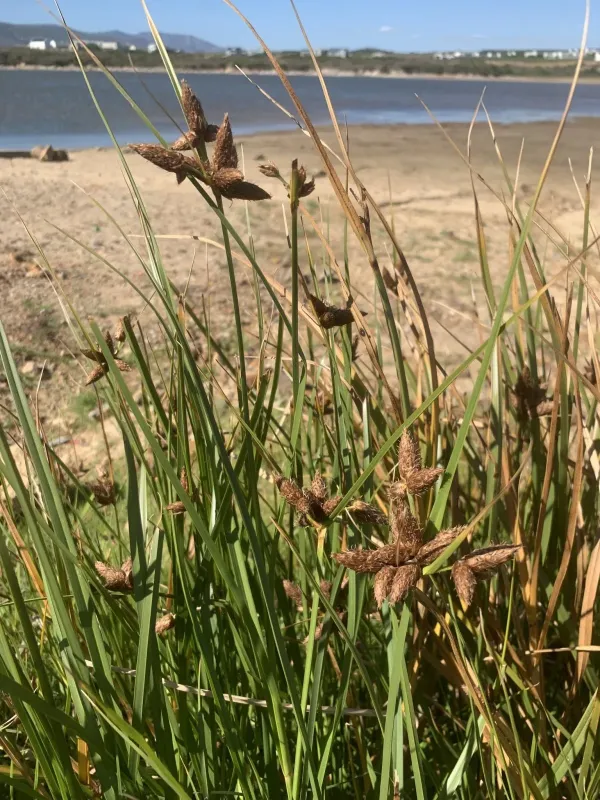
Description
Growing requirements
Sea club-rush (Bolboschoenus maritimus) is a robust perennial plant belonging to the Cyperaceae (sedge) family. It is a highly adaptable species, primarily recognized for its ability to thrive in saline and brackish environments, including tidal marshes and wet meadows.
The plant is distinguished by its unique underground rhizomes that terminate in edible, starchy tubers. These tubers serve as an efficient survival mechanism, allowing the plant to persist through periods of drought and extreme salinity that would be fatal to most other plants.
Cultivation requirements favor moist to waterlogged soil conditions. Sea club-rush requires full sunlight to achieve optimal biomass production. While it prefers nitrogen-rich, silty soils, it demonstrates remarkable tolerance to nutrient-poor or degraded soil types.
Climate adaptability is a hallmark of this species, as it is widely distributed across temperate regions. It is well-suited to areas with fluctuating water tables, making it a dominant feature in wetland ecosystems and irrigation infrastructure.
In terms of agricultural significance, Bolboschoenus maritimus is often classified as a serious weed in rice paddies and irrigation ditches. However, its high starch content suggests potential as a renewable feed source, provided that propagation and harvesting can be managed.
Main diseases and pests
Sea club-rush is notably resistant to most common agricultural pests due to its tough, fibrous structure and high levels of secondary metabolites. Insects rarely cause widespread damage to established colonies, which possess great regenerative capacity.
Pathogen threats are generally limited to specific rust fungi and leaf spot diseases that thrive in overcrowded, high-humidity environments. These infections typically impact the aerial parts of the plant rather than the persistent underground tubers.
Managing this species in agricultural settings is challenging. Because the tubers can remain dormant in the soil for extended periods, conventional tillage often facilitates the spread of the plant by breaking rhizomes into viable fragments.
Chemical control remains the most effective strategy for large-scale management. Herbicides targeting the translocation system are necessary to ensure that the active ingredients reach the tubers, which are the primary source of plant regrowth.
Integrated pest management strategies focusing on moisture control and soil drainage are recommended to reduce the competitive pressure of this species on more sensitive commercial crops in wetland environments.