
Pitaya
Selenicereus undatus (Haw.) D. R. Hunt
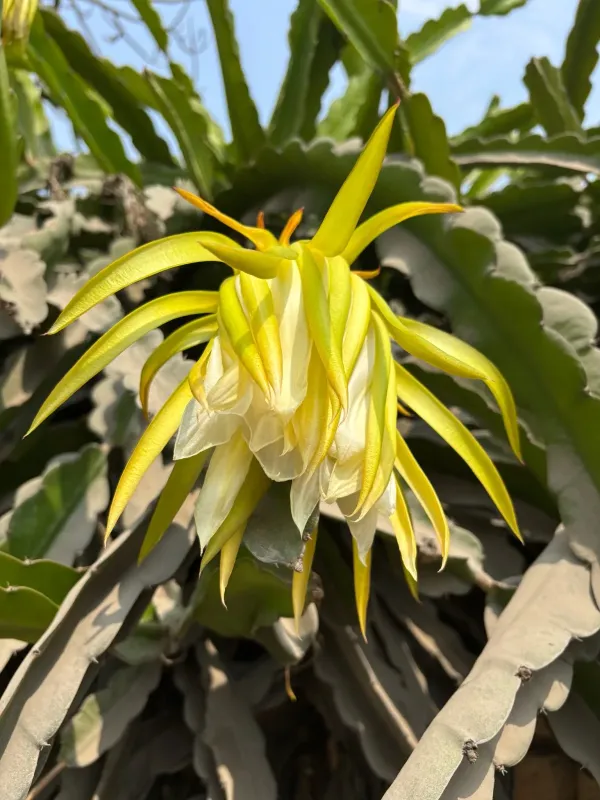
Description
Sowing dates
Pitaya (Selenicereus undatus) is primarily propagated through vegetative cuttings, which ensures genetic consistency and faster maturity than seed propagation.
Cuttings should be approximately 20-30 centimeters long and allowed to air-dry for several days until the wound callouses over to prevent fungal infections.
The best time for planting is the beginning of the growing season, provided there is enough warmth to encourage rapid root development in the substrate.
Plants are typically established in well-drained, raised rows to prevent waterlogging, which is a major concern for the succulent stem structures.
Spacings between plants should allow for both adequate growth of the sprawling stems and easy access for workers during routine maintenance and harvest.
Growing requirements
As a member of the Cactaceae family, the Pitaya requires significant sunlight, thriving in tropical and subtropical regions with minimal frost risk.
The soil should be sandy, loamy, or well-amended organic soil that maintains excellent drainage while holding enough moisture for fruit production.
Temperature management is critical; the plant prefers a range between 20°C and 30°C, and prolonged cold can severely hinder its metabolic activity.
Since it is an epiphyte, Pitaya requires sturdy trellising systems to mimic the natural climbing habit of the plant and to keep fruit off the ground.
Fertilization should focus on balanced NPK applications supplemented with organic matter to support the rapid biomass accumulation seen in this species.
Yield
The economic yield of Pitaya varies based on the cultivar and the efficiency of the trellis system used on the farm.
Initial harvests typically commence within 24 to 36 months of planting, with yield capacity increasing steadily as the plant reaches full maturity.
Fruit set depends heavily on successful pollination; in some environments, manual cross-pollination is practiced to ensure higher fruit quality and quantity.
Commercial orchards prioritize uniform fruit size and skin color, which are key indicators of peak readiness for the retail market.
Harvesting is labor-intensive and must be done carefully to avoid skin bruising, as the soft flesh of the dragon fruit is susceptible to damage.
Main diseases and pests
Fungal diseases such as anthracnose and stem rot are the primary threats, especially in humid conditions where airflow is restricted around the stems.
Common insect pests include mealybugs, aphids, and scale insects, which cluster on young shoots and sap the plant's vitality.
In some regions, small mammals or birds may target the ripening fruit, necessitating protective netting in highly susceptible areas.
Good plantation hygiene, including the removal of debris and proper weed control, is essential to minimize the habitat for potential disease vectors.
Regular monitoring of stem segments for discoloration or soft spots allows for early intervention, protecting the overall health of the plantation.