
Begonia venosa
Begonia venosa Skan ex Hook. f.
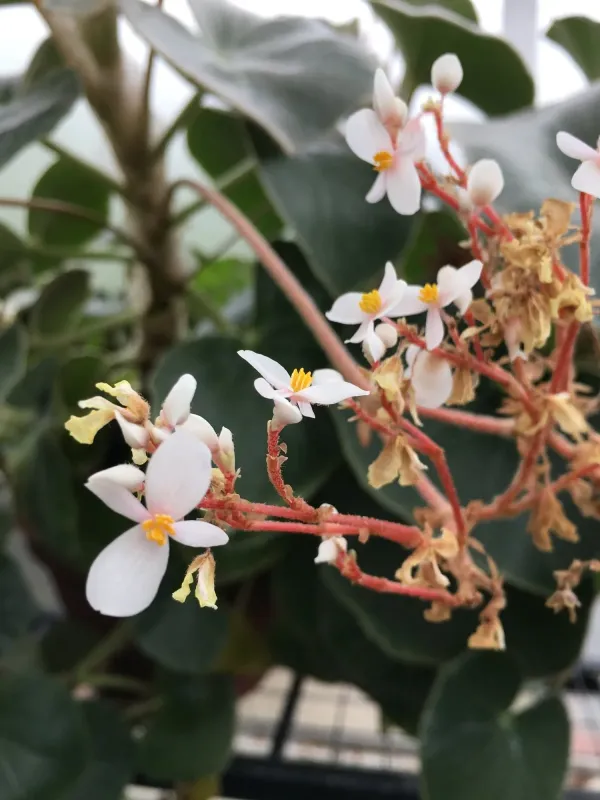
Description
Growing requirements
Begonia venosa, belonging to the Begoniaceae family, is a distinct species known for its succulent-like appearance and thick, peltate leaves. Originating from Brazil, this plant thrives in rocky environments, necessitating a cultivation strategy that mimics these natural conditions.
High light intensity is essential for maintaining the plant's characteristic structure. Without sufficient brightness, the stems tend to etiolate and lose their robustness. During the growing season, a temperature range between 20°C and 25°C is ideal, whereas a cooler environment is preferred during dormancy.
The substrate must be extremely well-draining, similar to that used for cacti or succulents. A mix comprising coarse sand, perlite, and a small proportion of organic potting soil provides the necessary aeration to prevent root rot, which is the primary danger for this species.
Watering requirements are specific: the plant must be allowed to dry out significantly between sessions. During winter, hydration should be severely restricted to keep the plant dormant and prevent damage to its water-storing tissues.
Fertilization should be handled with care. During the peak growing season, use a balanced, diluted fertilizer every 4 to 6 weeks. Avoid high nitrogen levels to ensure the plant maintains its compact, sculptural form rather than producing weak, elongated growth.
Main diseases and pests
Root rot is the most common threat to Begonia venosa, typically resulting from overwatering or poorly aerated soil. Early signs include yellowing of the lower leaves and a softening of the stem base, which requires immediate repotting into dry substrate.
Powdery mildew can occur in environments with poor air circulation or high humidity levels. Improving airflow around the plant is the most effective preventative measure to stop the spread of fungal spores across the foliage.
Spider mites represent the most significant pest risk. These pests thrive in dry conditions and can quickly drain the sap from the leaves, leading to chlorosis and potential leaf drop if left untreated.
Mealybugs may hide in the leaf axils or along the stems, protected by the plant's natural fuzz. Manual removal or the use of neem oil-based solutions is often recommended for smaller infestations to avoid chemical stress.
Routine inspections are vital for health monitoring. Ensure that no water remains trapped in the center of the plant or in the junction of the leaves, as trapped moisture creates an ideal breeding ground for both pathogens and pests.