
Rex begonia
Begonia rex Putz. x B. sikkimensis A. DC.
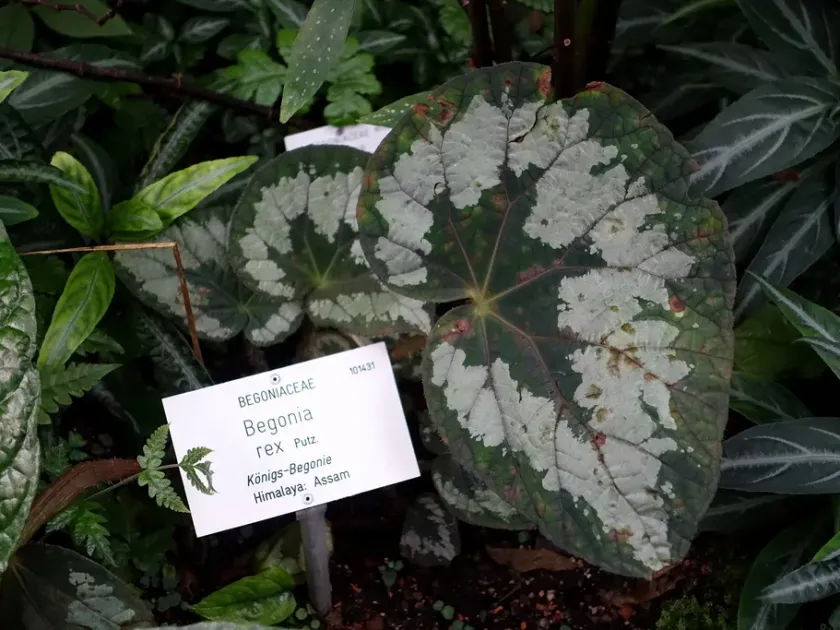
Description
Growing requirements
The Rex begonia belongs to the Begoniaceae family and is recognized for its spectacular foliage and rhizomatous growth habit. Originating from the tropical forests of India, this plant requires specific environmental conditions to thrive and express its unique coloration.
The optimal temperature range for the culture is between +18 and +24 degrees Celsius. It is essential to protect the plants from cold drafts and sudden temperature drops, which can severely damage the foliage and cause the plant to enter a state of stress.
The ideal soil substrate should be loose, well-draining, and slightly acidic. A mix consisting of peat, leaf mold, and perlite is recommended to ensure proper root aeration and moisture retention without the risk of waterlogging, which is a major factor for root decay.
Proper lighting involves bright, indirect sunlight to maintain the vibrancy of the foliage patterns. Exposure to direct sun will cause burning on the leaves, while insufficient light leads to stunted growth and loss of the intense leaf pigmentation characteristic of the species.
Humidity management is crucial for the cultivation of this species, ideally ranging above 60%. While the soil should remain moist, water should never be allowed to accumulate in the crown of the plant, as moisture trapped in the leaves promotes rapid deterioration.
Main diseases and pests
Powdery mildew represents a significant threat to Rex begonias, manifesting as a white fungal dusting on the foliage. This condition is primarily linked to stagnant air and high humidity, necessitating improved ventilation and the use of fungicides to manage outbreaks.
Gray mold (Botrytis) frequently infects damaged or excessively damp tissues. The fungus causes lesions that spread quickly, eventually leading to the collapse of the entire leaf structure if the environmental conditions are not immediately corrected by reducing moisture.
Spider mites are the most troublesome pests, particularly in warmer, dry indoor environments. They pierce the leaf cells to feed, resulting in speckled leaves and loss of color, which severely impacts the ornamental value of the plant if left unchecked.
Whiteflies can also colonize the undersides of the leaves, weakening the plant by draining its sap and potentially spreading secondary viral infections. Control involves the application of appropriate systemic insecticides and maintaining a hygienic growing environment.
Root rot is the most common fatal ailment, usually caused by overwatering or poor soil drainage. Maintaining a strict watering schedule and inspecting the root system regularly helps prevent this issue, ensuring the plant maintains a healthy and robust growth pattern.