
Begonia manicata
Begonia manicata Brongn. ex Cels
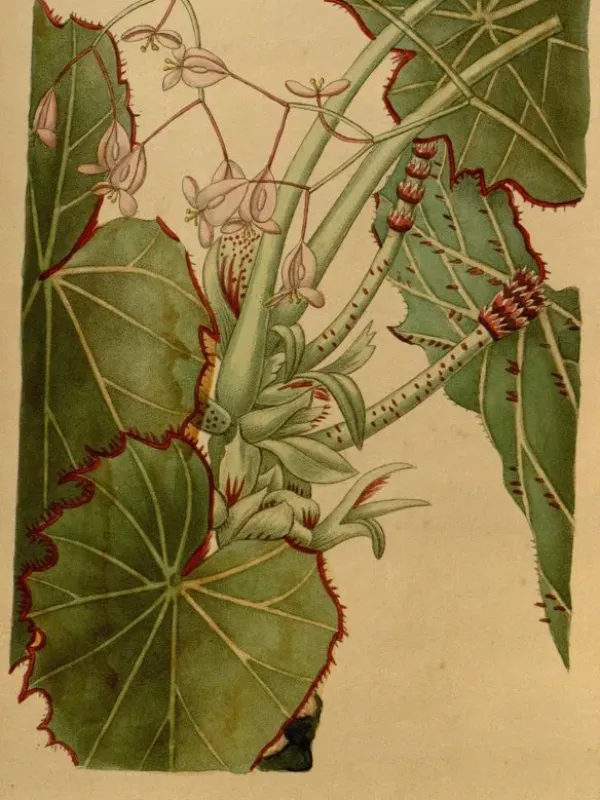
Description
Growing requirements
Begonia manicata, commonly known as the collar begonia, belongs to the Begoniaceae family. It is a perennial plant native to the tropical rainforests of Mexico. The species is easily identifiable by the distinctive ring of hairs, resembling a collar, at the junction of the leaf blade and the petiole.
In terms of cultivation, this plant requires bright but indirect light to maintain its vibrant leaf color and overall health. Direct sunlight must be avoided, as it causes severe tissue damage to the leaves. The ideal temperature range for this species is between 18°C and 22°C throughout the year.
The soil requirement involves a well-draining, slightly acidic mixture rich in organic matter. A standard peat-based potting mix amended with perlite or coarse sand provides the necessary aeration for root development. Proper drainage is essential to prevent root rot, which is the most common cause of plant failure.
Watering practices should be consistent, allowing the top layer of soil to dry out between sessions. While the plant thrives in high humidity, it is vital to avoid misting the foliage directly, as water droplets sitting in the leaf axils promote decay. Using a pebble tray is the preferred method for humidity control.
Economically, Begonia manicata is utilized primarily in the ornamental horticulture industry. It is highly valued for indoor decoration in offices, lobbies, and residential environments due to its aesthetic appeal, robust growth habits, and relatively low maintenance compared to more temperamental begonia species.
Main diseases and pests
The plant is susceptible to fungal infections such as powdery mildew and Botrytis (gray mold). These issues typically occur in environments with poor air circulation and high humidity without adequate ventilation. Applying appropriate systemic fungicides is recommended for control.
Insect pests, including spider mites and scale insects, often target the undersides of the leaves. Regular scouting is critical for early detection. Integrated pest management, including physical removal of insects and the application of horticultural oils or insecticides, is necessary to keep the plant in good condition.