
Hybrid Begonia
Begonia hatacoa x Begonia deliciosa
Description
Growing requirements
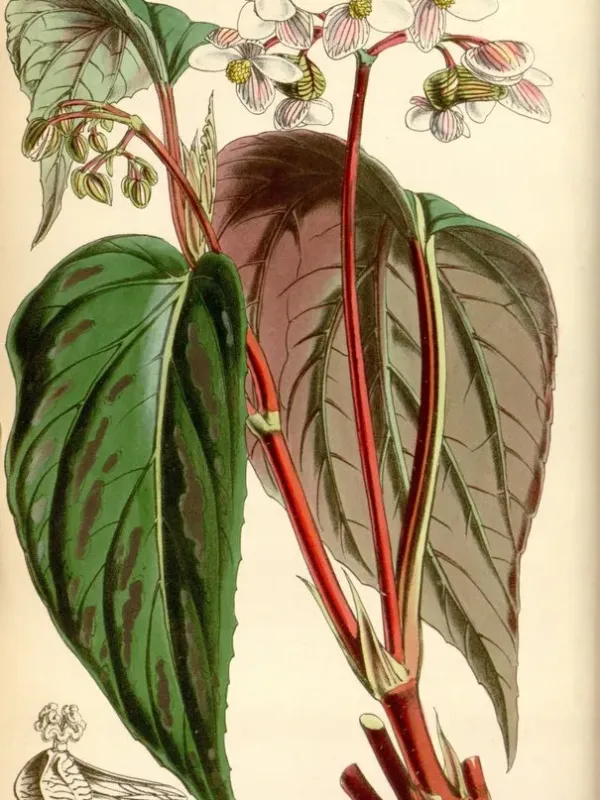
The hybrid begonia (Begonia hatacoa x Begonia deliciosa) is a specialized ornamental plant belonging to the Begoniaceae family. Derived from Asian tropical species, it requires careful environmental management to maintain its distinct morphological characteristics, such as leaf texture and pigmentation.
The plant thrives in stable temperatures between 18°C and 24°C. It is highly sensitive to thermal shocks, meaning that placing the plant near air conditioning vents or heaters can lead to rapid wilting or stress-induced leaf abscission.
A well-draining, slightly acidic soil substrate is essential. Growers typically utilize a mix containing peat moss, pine bark, and perlite to ensure optimal aeration. This specific structure prevents compaction and provides the necessary drainage to protect the delicate root system.
Light requirements for this hybrid are strict: it needs bright, indirect light to maintain vibrant foliage color. Exposure to direct midday sun is damaging, as the thin leaves of this Begonia hybrid are prone to photodynamic injuries and bleaching.
Humidity management is a critical component of the cultivation cycle. The species prefers relative humidity levels around 65-70%. Consistent humidity is necessary to prevent the edges of the leaves from turning brown or becoming brittle, which often indicates an unfavorable microclimate.
Main diseases and pests
Powdery mildew is the most common fungal threat to hybrid begonias. It appears as a white, powdery coating on leaves and stems. This condition is usually exacerbated by high humidity combined with stagnant air, making proper ventilation essential for disease prevention.
Bacterial leaf spot is another major concern, particularly in nursery settings. It manifests as dark, water-soaked spots on the foliage. Since this pathogen spreads via water splashes, bottom-watering techniques are highly recommended to keep the foliage dry.
Spider mites represent the primary pest challenge for this culture. These microscopic arachnids thrive in warm, dry environments and can quickly weaken the plant by feeding on cell sap, leading to stunted growth and yellowing of the leaves.
Mealybugs can also infest the plant, usually clustering in the leaf axils. Due to their waxy coating, they can be difficult to remove; therefore, systemic insecticides or targeted applications of horticultural oils are often required for effective control.
Integrated pest management (IPM) for begonias includes regular sanitation of the growing area and prompt isolation of any affected plants. Monitoring for signs of infestation is vital, as early detection significantly reduces the need for heavy chemical intervention.