
Conch-leaf begonia
Begonia conchifolia A. Dietr.
Description
Growing requirements
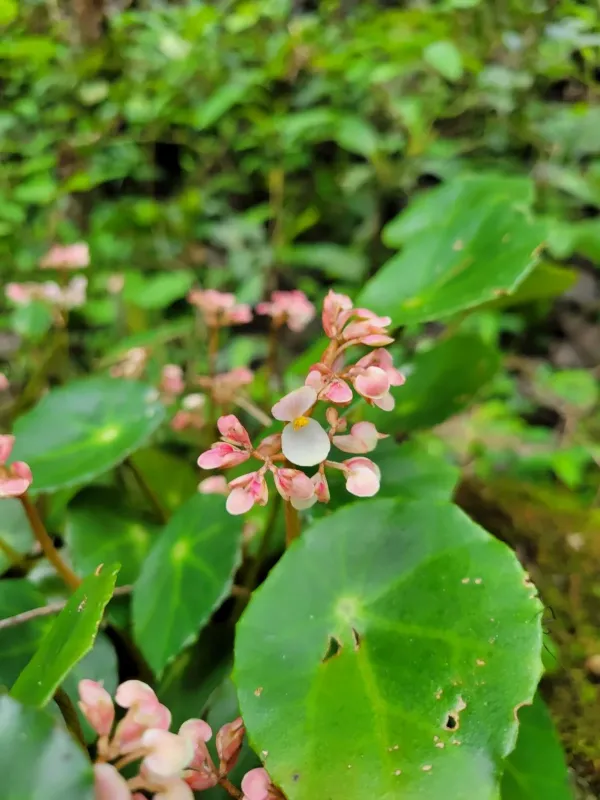
The Begonia conchifolia, commonly known as the conch-leaf begonia, belongs to the Begoniaceae family. It is a rhizomatous perennial notable for its unique peltate, concave leaves that resemble the shape of a conch shell.
Originating from the tropical rainforests of Costa Rica, this species thrives in humid environments. It typically grows on forest floors or as an epiphyte, requiring filtered light and consistent moisture to reach its full growth potential.
Cultivation requires temperatures between 18°C and 24°C. The plant should be protected from extreme temperature fluctuations and cold drafts, as these conditions are detrimental to the integrity of the foliage.
A well-draining, peat-based potting mix is essential for this species. Adding perlite or coarse sand helps improve aeration, preventing the roots from suffocating in heavy, waterlogged substrates.
Humidity management is crucial; Begonia conchifolia performs best when ambient humidity is maintained between 60% and 75%. Using pebble trays filled with water or grouping plants together helps create a microclimate.
Main diseases and pests
Botrytis blight, or grey mold, is a common threat caused by high humidity combined with poor airflow. It manifests as fuzzy grey patches on leaves and stems, often leading to rapid tissue decay.
Root rot is the most frequent issue in indoor environments, usually resulting from overwatering or utilizing pots without proper drainage. Once the roots are compromised, the foliage will yellow and collapse.
Pests such as spider mites and mealybugs can infest the plant, particularly in dry indoor conditions. These pests hide in the crevices of the rhizomes and the undersides of the foliage.
Control measures include mechanical removal of visible pests and the application of horticultural oils or systemic insecticides. Maintaining good hygiene by removing dead plant debris is also recommended.
Preventative care involves regular monitoring of the leaf undersides and ensuring that the top layer of the soil is allowed to dry slightly between watering sessions to discourage fungal pathogens.