
Begonia boliviensis
Begonia boliviensis A. DC.
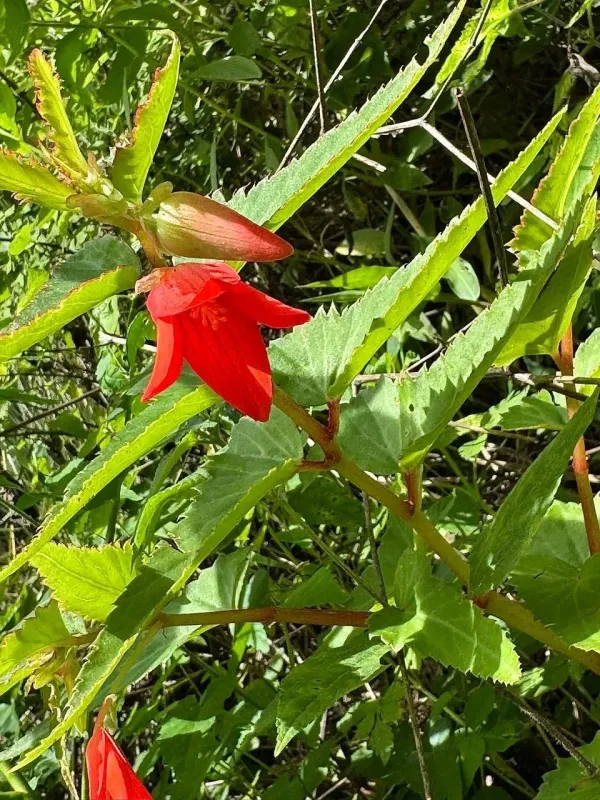
Description
Sowing dates
Begonia boliviensis (Begonia boliviensis A. DC.) is a tuberous perennial species within the Begoniaceae family. Propagation is primarily done via seeds or stem cuttings, with seed sowing starting in late winter to ensure enough time for tuber formation.
Seeds are extremely fine and should be surface-sown on a moist, well-draining sterile substrate. They require light to germinate and should be kept at temperatures between +22°C and +24°C.
Once seedlings develop their first true leaves, they are pricked out into small containers. Maintaining high humidity is crucial during this early stage to prevent dehydration.
For commercial production, stem cuttings are often preferred as they produce uniform plants that flower much earlier than those grown from seeds.
The final transplanting to outdoor garden beds or hanging baskets should occur only after all risks of frost have passed, as the species is sensitive to cold stress.
Growing requirements
This species thrives in partial shade conditions, as intense midday sun can scorch the foliage and reduce the vigor of the plant. A location with bright, indirect light is optimal.
Soil requirements focus on high organic matter content, excellent drainage, and a slightly acidic pH (5.5–6.5). Waterlogged soils must be avoided to prevent root diseases.
Regular watering is necessary, allowing the top centimeter of soil to dry out between applications. This promotes healthy root growth and minimizes the risk of pathogens.
Fertilization with a balanced, water-soluble fertilizer rich in potassium is recommended throughout the blooming season to sustain the profuse production of flowers.
Optimal growth occurs at temperatures between +18°C and +25°C. In areas with cold winters, tubers should be lifted before the first frost and stored in a cool, dry place.
Main diseases and pests
Powdery mildew is a frequent fungal disease, often triggered by poor air circulation and high ambient humidity. Improving ventilation is key to effective disease management.
Spider mites are the most troublesome pests, particularly in greenhouse environments. Their presence is indicated by stippling on the leaves, which can be managed with miticides.
Root and crown rots caused by Pythium or Phytophthora are common in poorly drained substrates. Strict adherence to irrigation schedules is the best preventative measure.
Thrips may infest the blooms, leading to distorted flower development and unsightly necrotic spots on the petals, requiring regular monitoring and insecticide applications.
Aphids can target soft, new growth during the spring. Early detection and the use of insecticidal soaps are usually sufficient to control moderate infestations.