
Austrostipa variabilis
Austrostipa variabilis
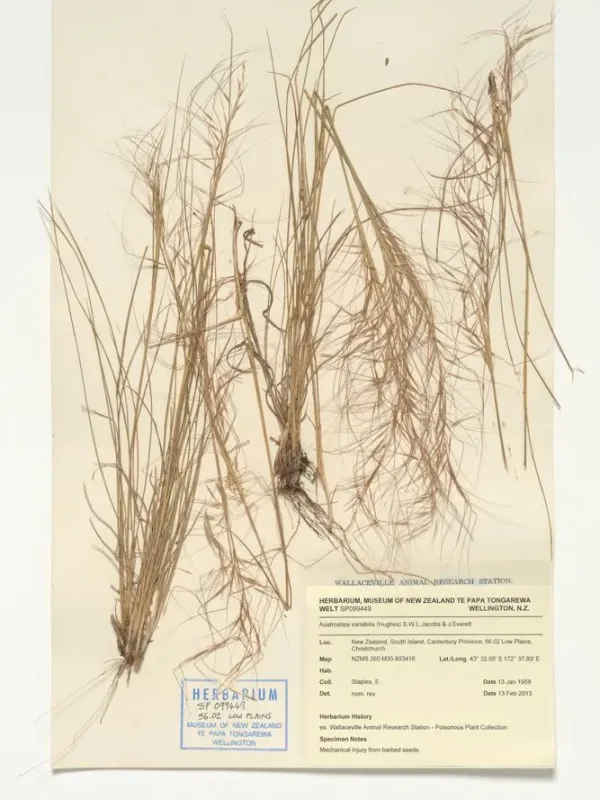
Description
Growing requirements
Austrostipa variabilis, commonly known as a type of spear grass, is a perennial plant species within the Poaceae family. It is native to the arid and semi-arid regions of Australia, where it has evolved to thrive in environments characterized by limited and irregular rainfall patterns.
The morphology of this grass includes narrow, tough leaves and a dense tussock-forming habit. This structure is an adaptation to drought, allowing the plant to minimize transpiration and maintain physiological processes even under harsh environmental pressure throughout the summer months.
Regarding soil requirements, the species prefers well-drained, light-textured soils. It displays remarkable tolerance for varying pH levels and can survive in moderately saline conditions, which makes it an essential species for soil stabilization in degraded areas or regions prone to desertification.
The plant requires high light intensity for optimal growth and biomass production. In agricultural landscapes, it acts as a hardy perennial that provides stable ground cover. Its ability to regrow after grazing makes it a staple component of permanent pastures in its native distribution range.
The primary agricultural use of this crop is forage for livestock, particularly sheep. Although the plant can become quite coarse as it matures, the young growth is highly nutritious, providing critical sustenance when more sensitive fodder species fail to survive the dry season.
Main diseases and pests
The primary threats to Austrostipa variabilis include fungal diseases that flourish under conditions of excessive soil moisture and poor drainage. Root rots represent the most significant risk, as they weaken the plant’s base and hinder its ability to recover after intensive grazing.
Pest threats are often dominated by insects that target the inflorescences and seeds, which can lead to a decline in natural recruitment rates. Additionally, locust swarms or localized outbreaks of defoliating insects can occasionally strip the plant of its nutritional foliage.
Agrotechnical management strategies to mitigate these threats include rotational grazing, which prevents the build-up of pests and pathogens in specific zones. Controlled burning is also a widely recognized practice that resets the growth cycle, removes dead material, and sanitizes the pasture.
Proper field management focuses on maintaining soil aeration and preventing waterlogging. By ensuring that the plant environment is not excessively damp, growers can significantly reduce the incidence of fungal pathogens that target the root systems of native grasses.
Integrated pest management involves monitoring plant health during the early vegetative phase to detect signs of stress. By managing the intensity of grazing and keeping the soil environment healthy, landowners can effectively protect the long-term viability of their Austrostipa grasslands.